-

- Alicia Eugenia Castro Gonzalez
Alicia
Eugenia Castro Gonzalez
Akelarre, The Season of the Witch
BA Fashion (with Technology)
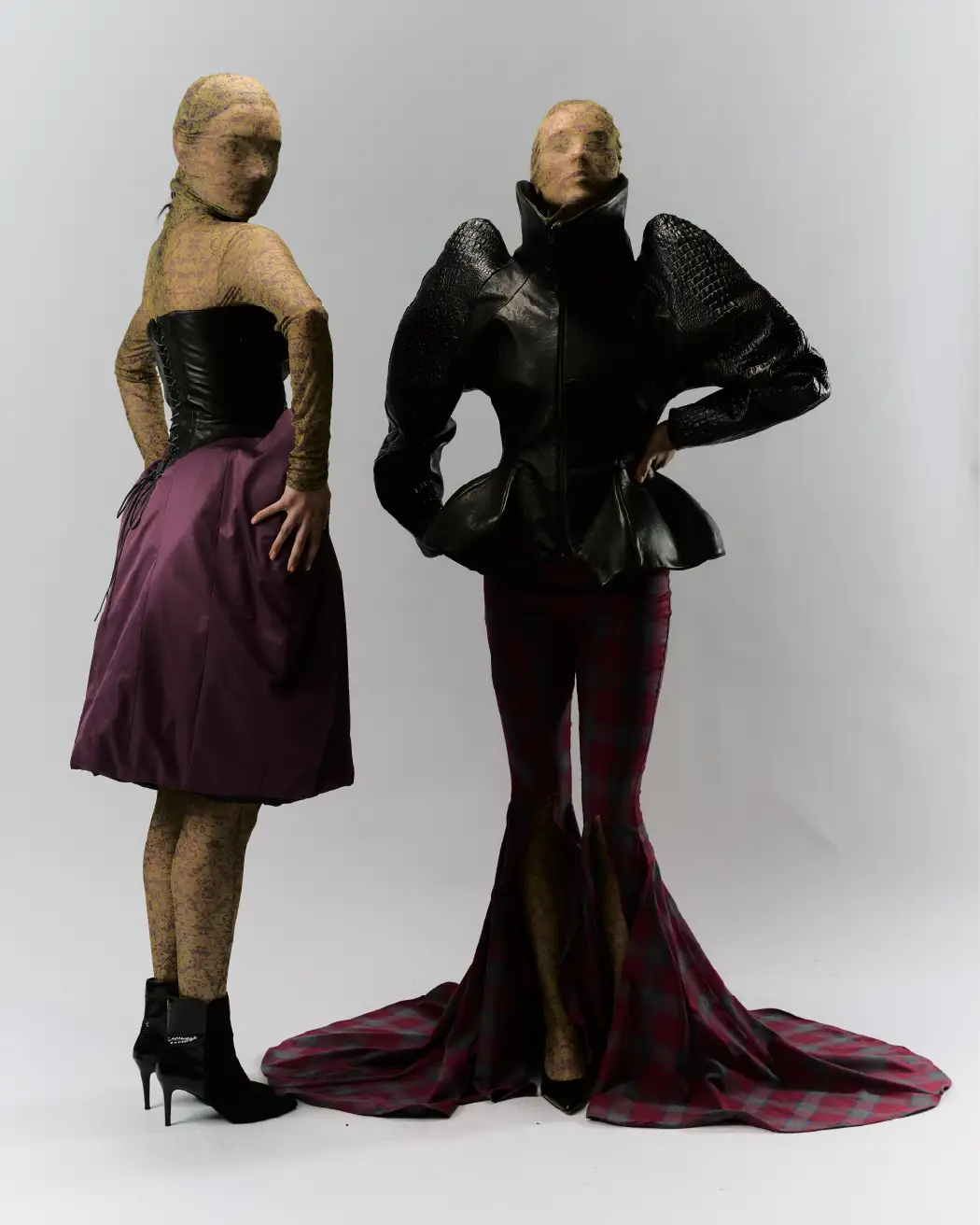
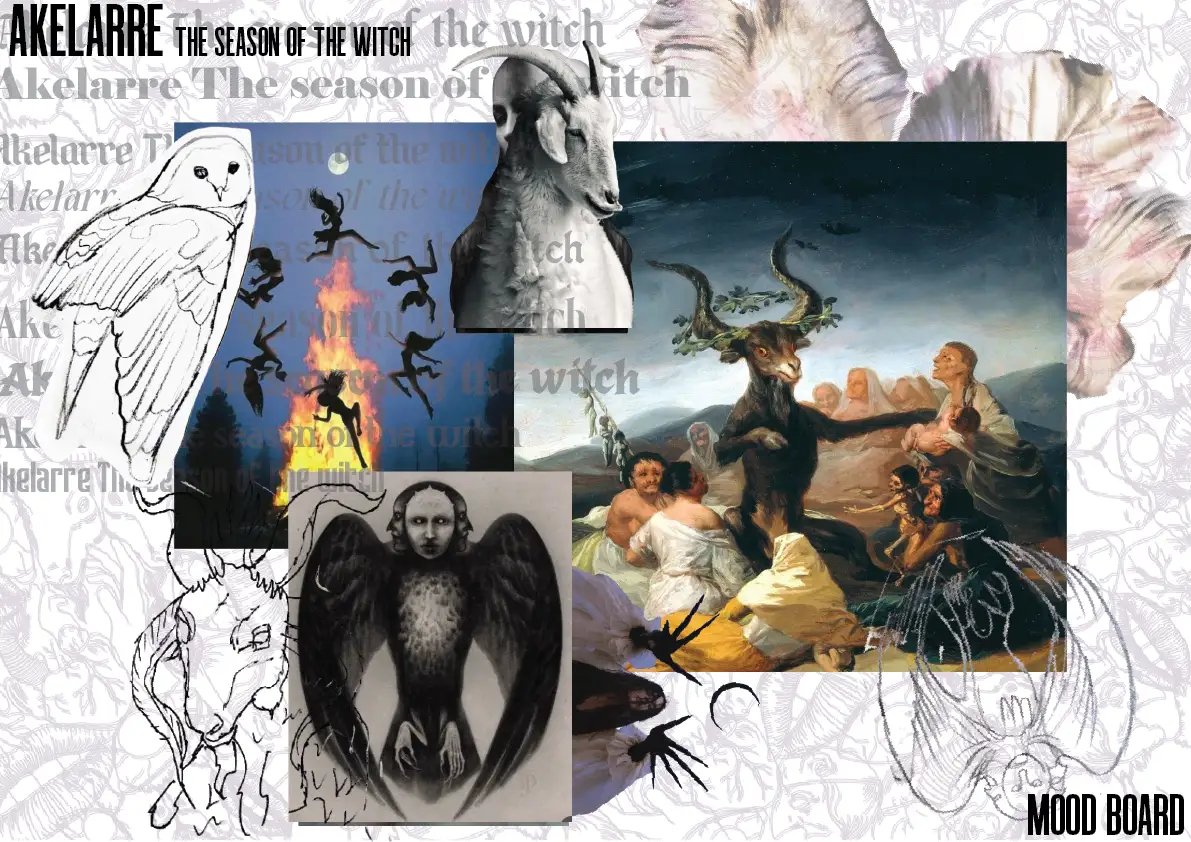
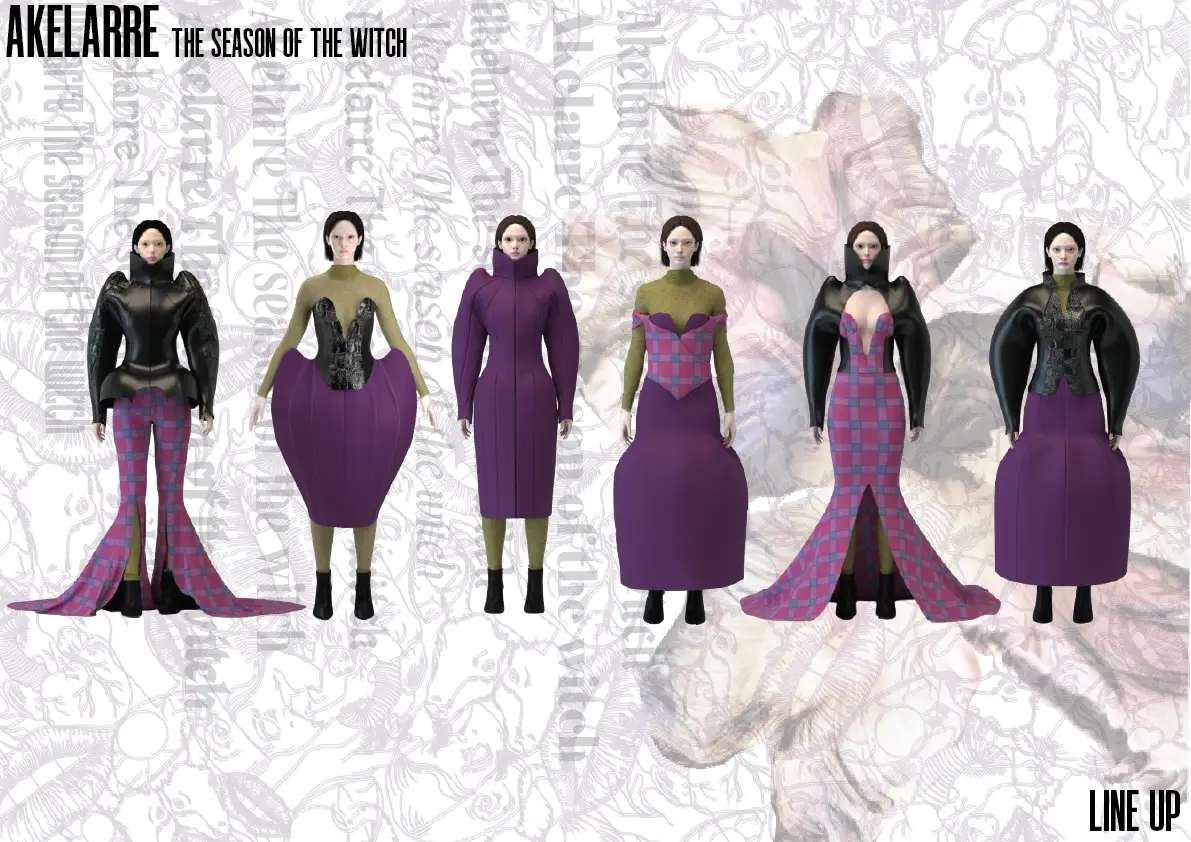
“Akelarre: The Season of the Witch” is a collection inspired by the historical and cultural associations with witchcraft, understood as a set of beliefs and ritual practices that have evolved over time. These practices were primarily associated with women who possessed knowledge of herbs, remedies, and potions, and who were persecuted and executed for using their wisdom.
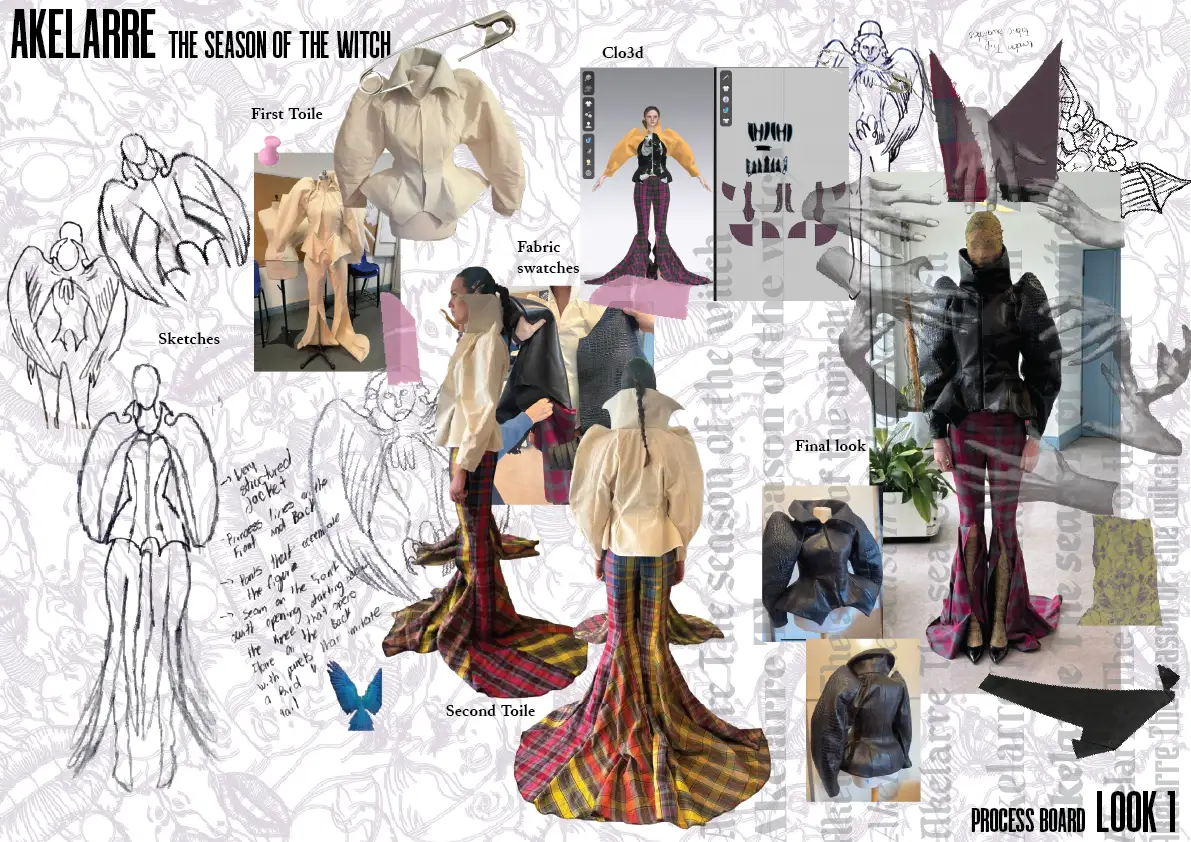
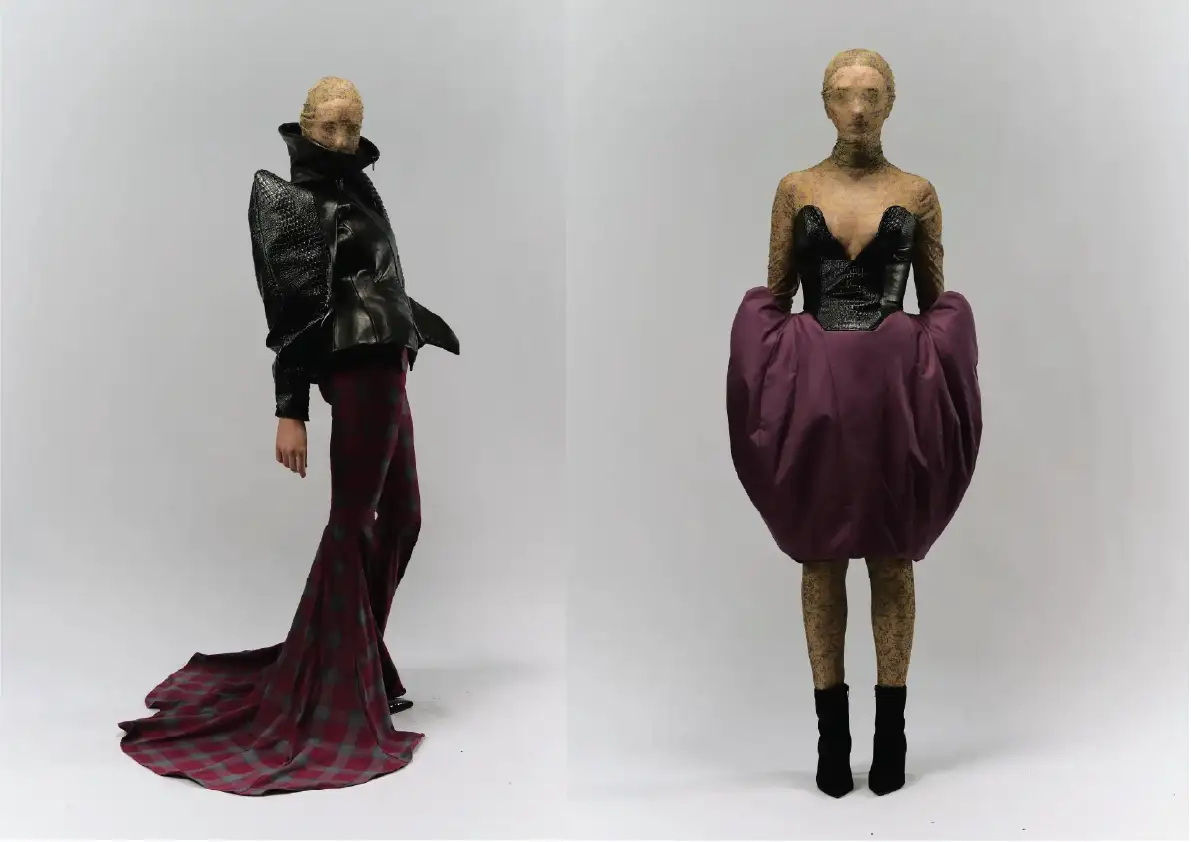
With this collection, I explore a bold and dramatic representation of femininity through the development of defined, sculptural silhouettes that convey confidence and presence. As a source of inspiration for creating these silhouettes, I focused on animal forms traditionally associated with witchcraft, particularly owls and goats and used them as a reference to shape the silhouettes and tailoring techniques. The choice of materials played a significant role in reinforcing the concept; I used fabrics such as leather and tartan, which are historically and symbolically associated with durability and tradition. The result is a collection of women’s clothing that seeks to convey an image of femininity that emphasizes strength, self-expression, and visibility. I supported my process by using digital tools such as Clo3d and Gerber, which helped me explore my concepts and ideas before translating them into a physical format.
Work Placement –Marina Hoermanseder – Berlin.
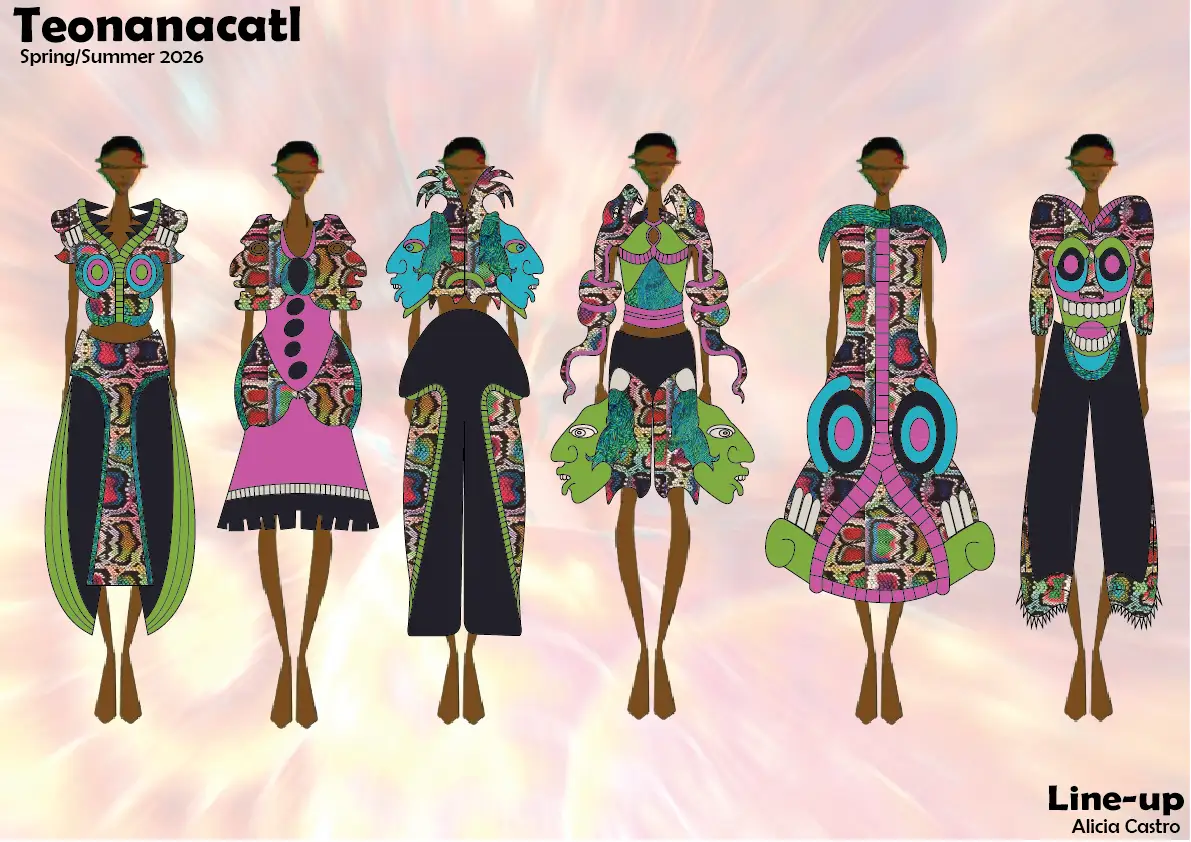
Teonanácatl
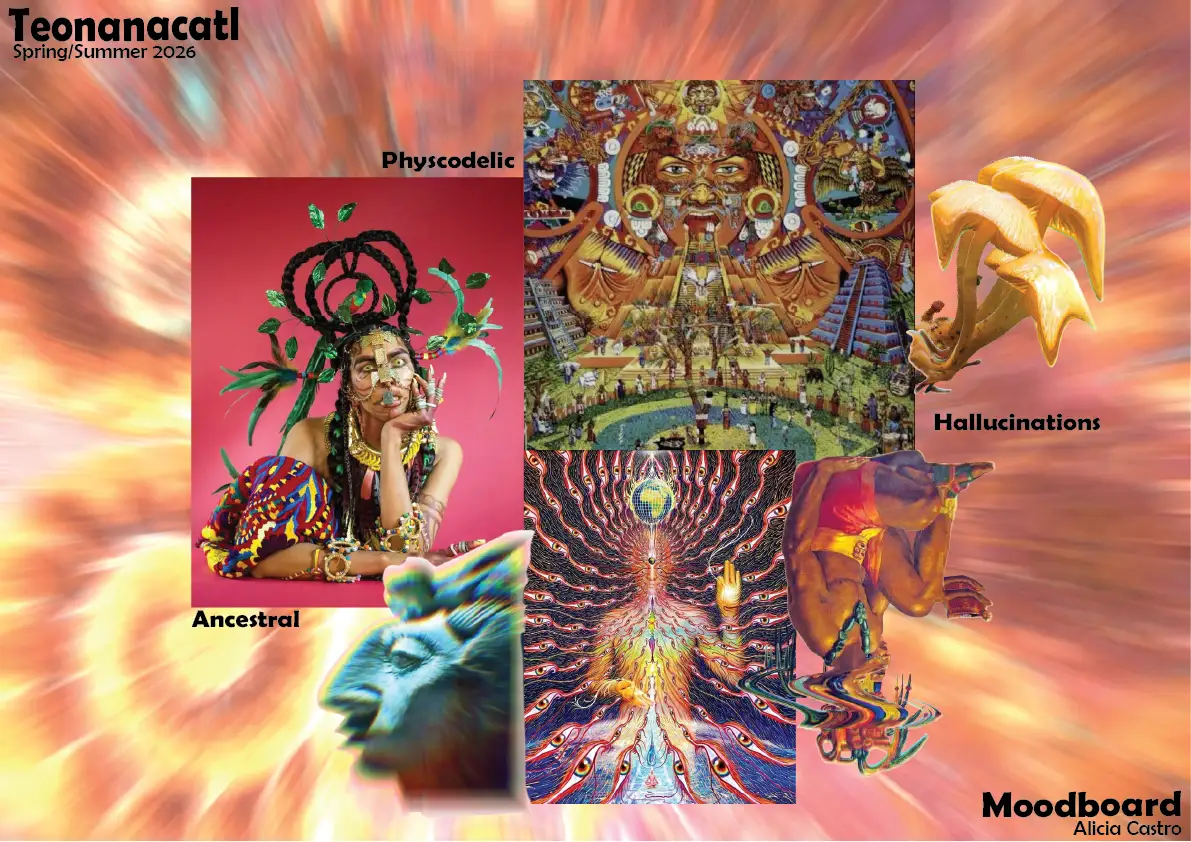
Long before the modern world began discussing spiritual experiences or altered states of consciousness, indigenous civilizations had already found in nature a direct connection to the divine. The Teonanácatl, known as “the flesh of the gods,” was not merely a hallucinogenic mushroom, but a sacred element used in rituals and ceremonies to connect the earthly world with the spiritual. Through these practices, shamans entered visionary states where time, reality, and spirit seemed to blend, allowing them to seek messages, answers, and guidance from the gods.
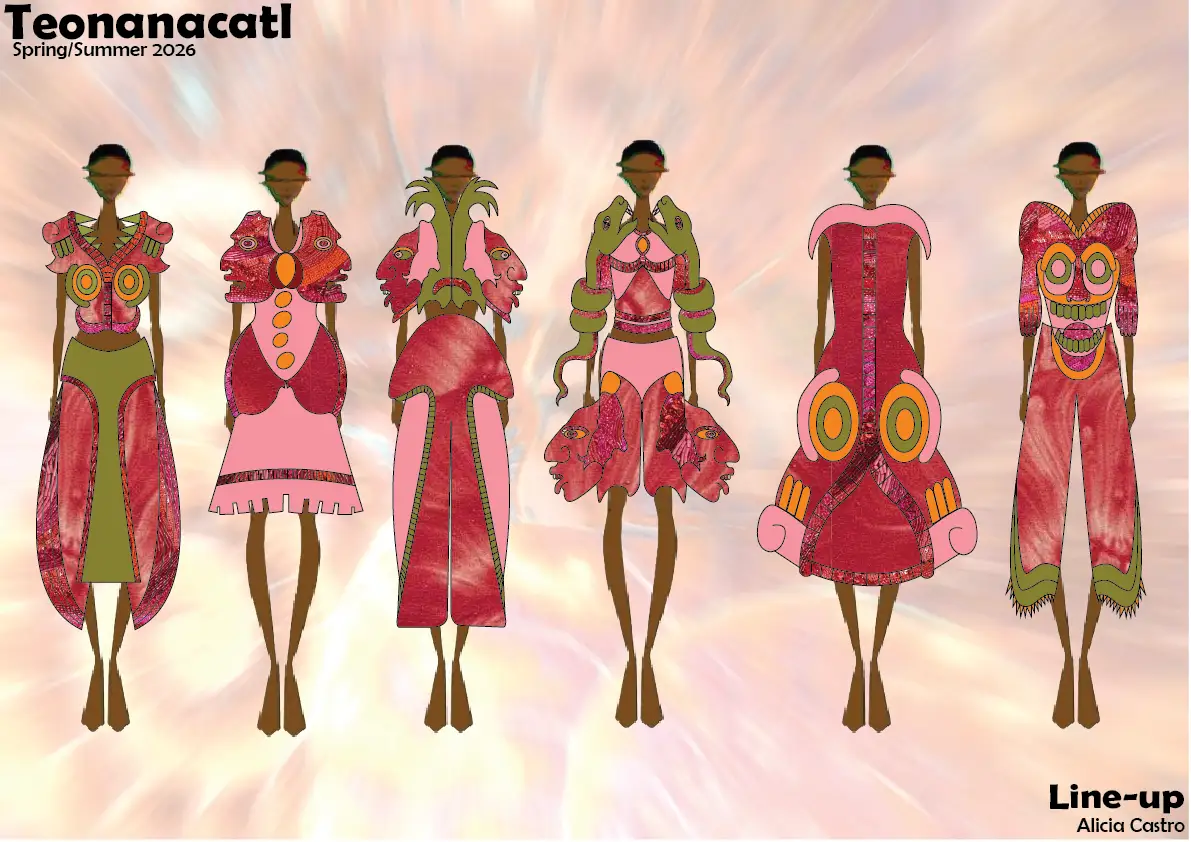
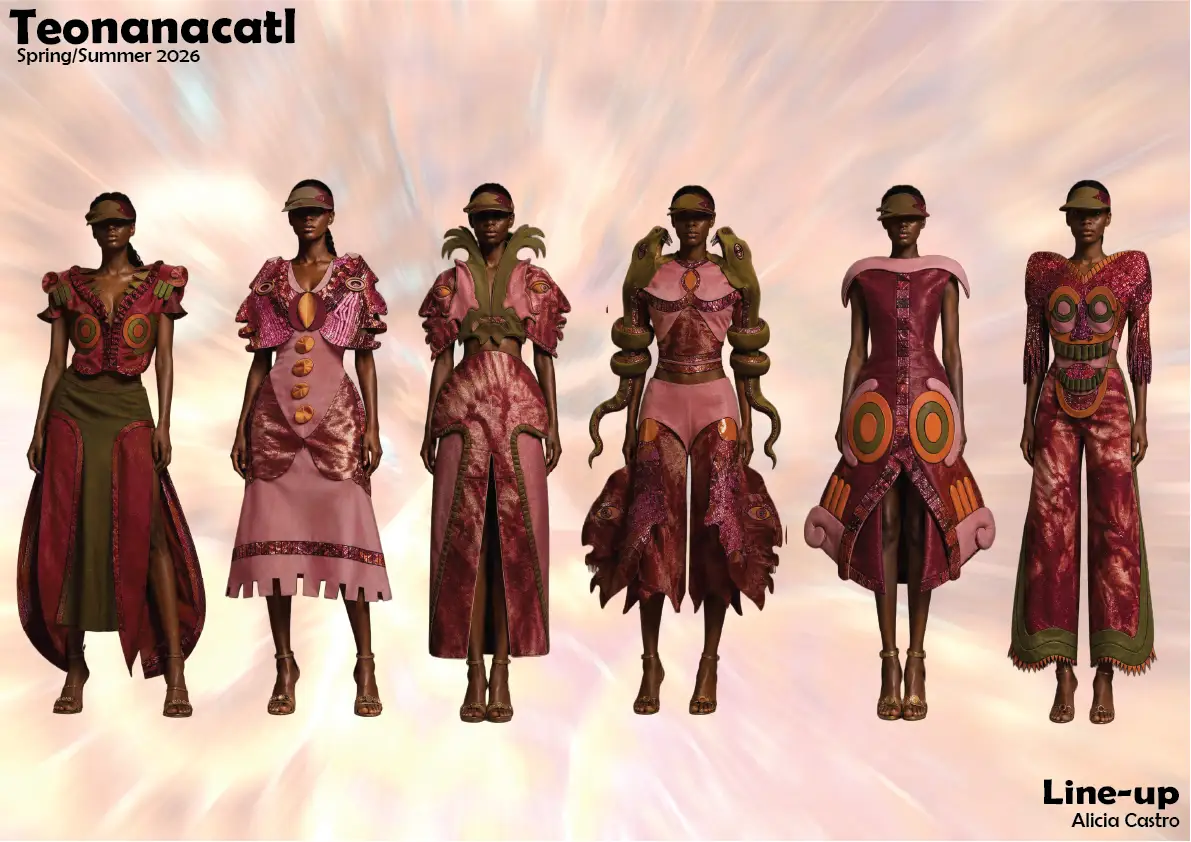
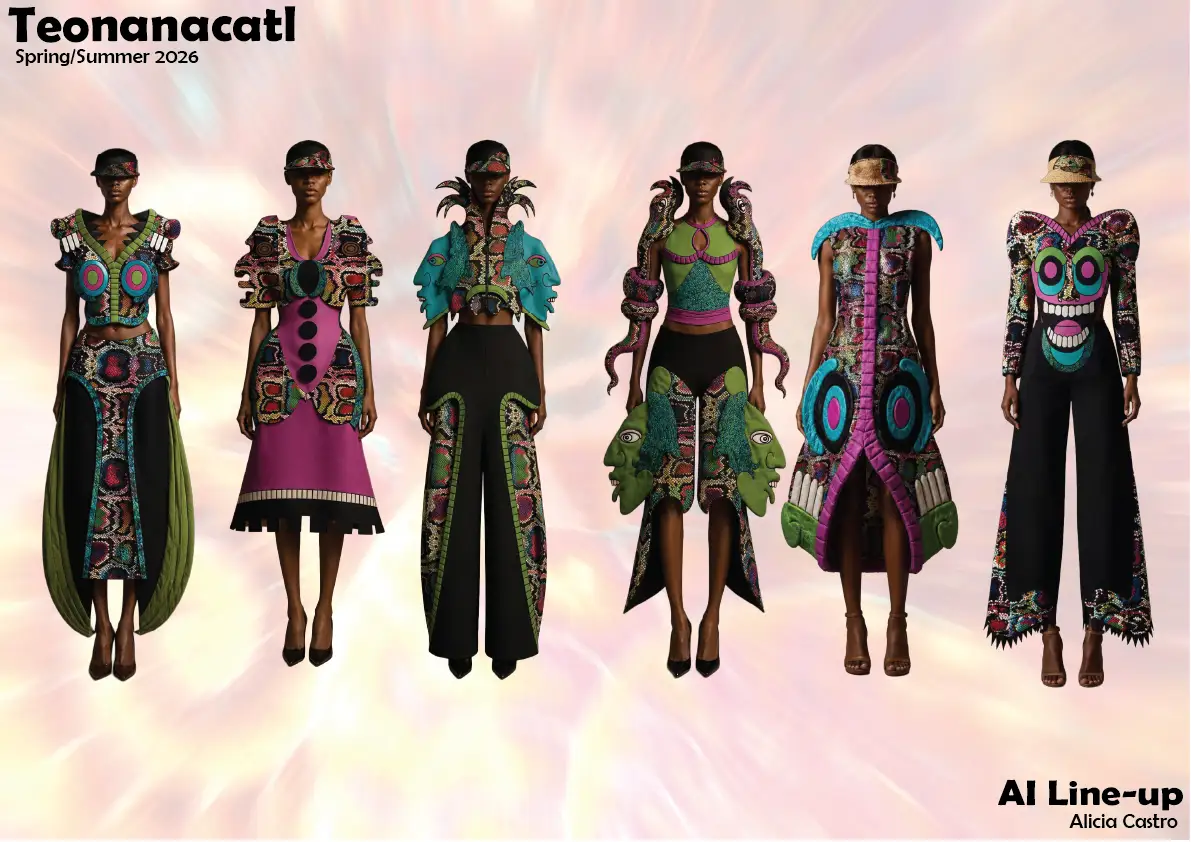
The symbolism of Teonanácatl went far beyond the physical: it represented transformation, hidden knowledge, and a deep spiritual connection. Its use reflected a way of understanding the world in which nature and the divine coexisted in balance. Inspired by this idea, I incorporated references to Mexica gods combined with unexpected blends of textures, colors, and shapes that evoke a psychedelic and mystical sensation. It becomes a collection with cultural, historical, and aesthetic significance that seeks to question the boundaries between reality, perception, and the spiritual.