
-

- Leah O’Dwyer
Leah
O’Dwyer
Digital Doppelgängers
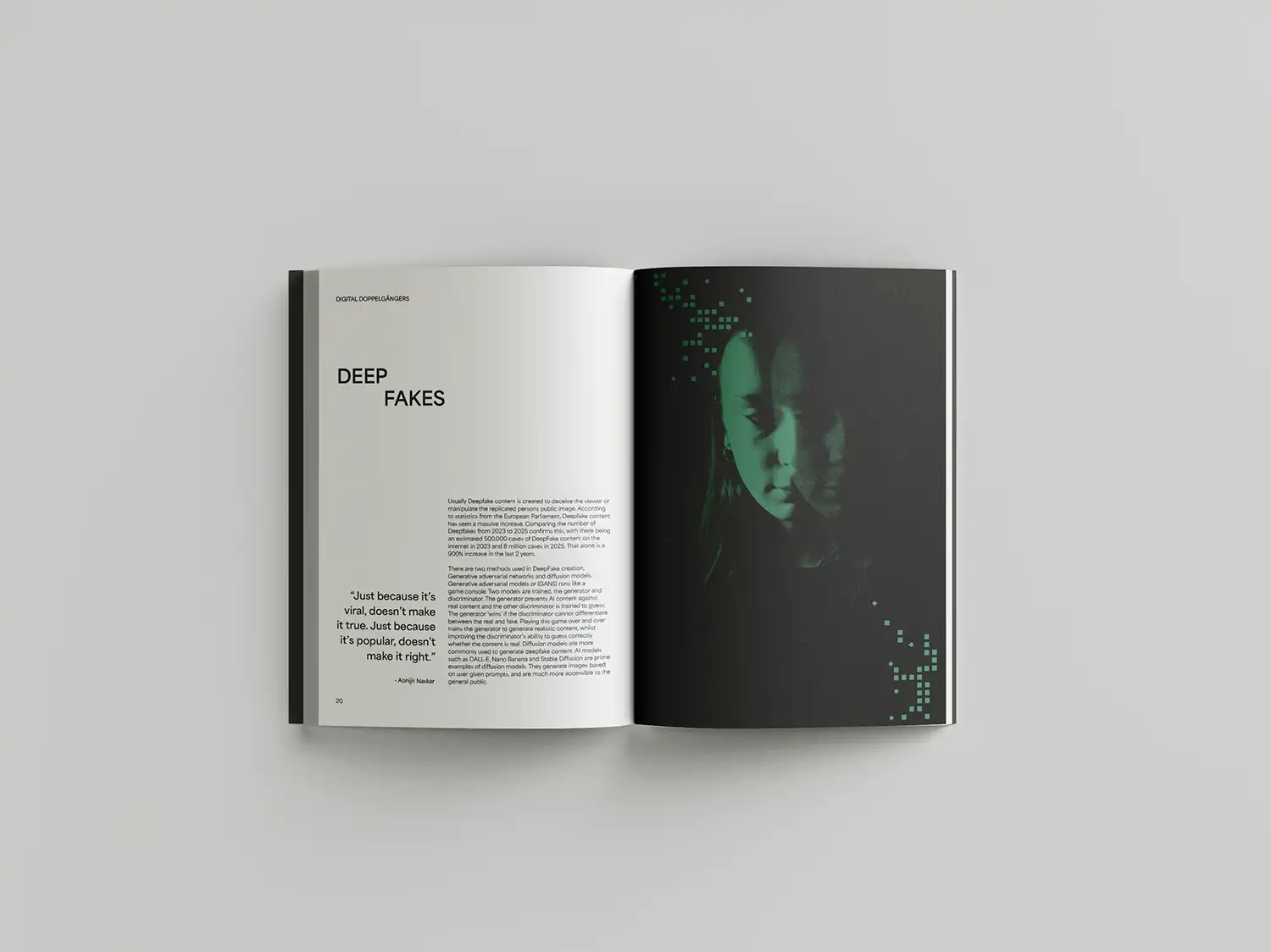
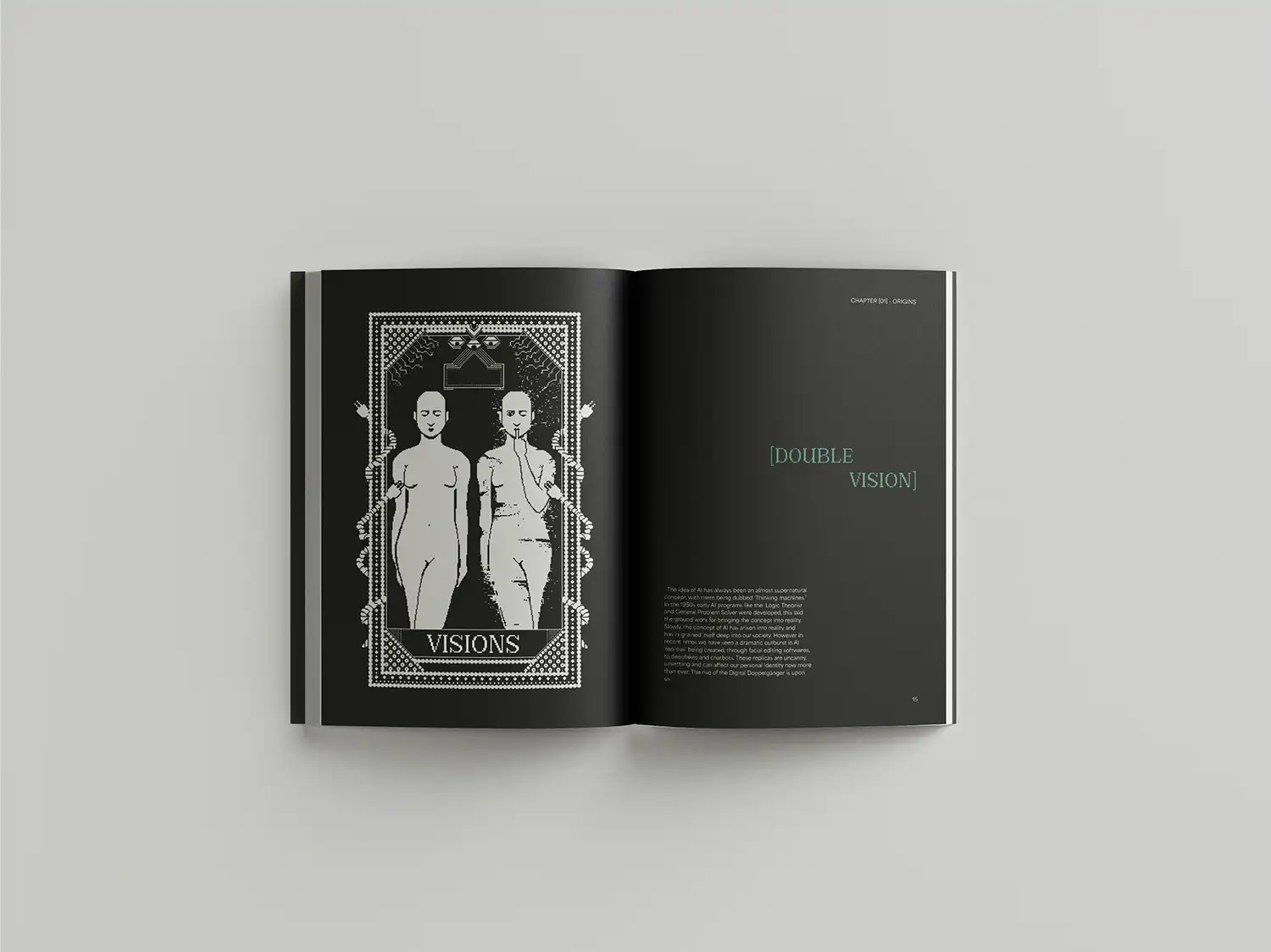
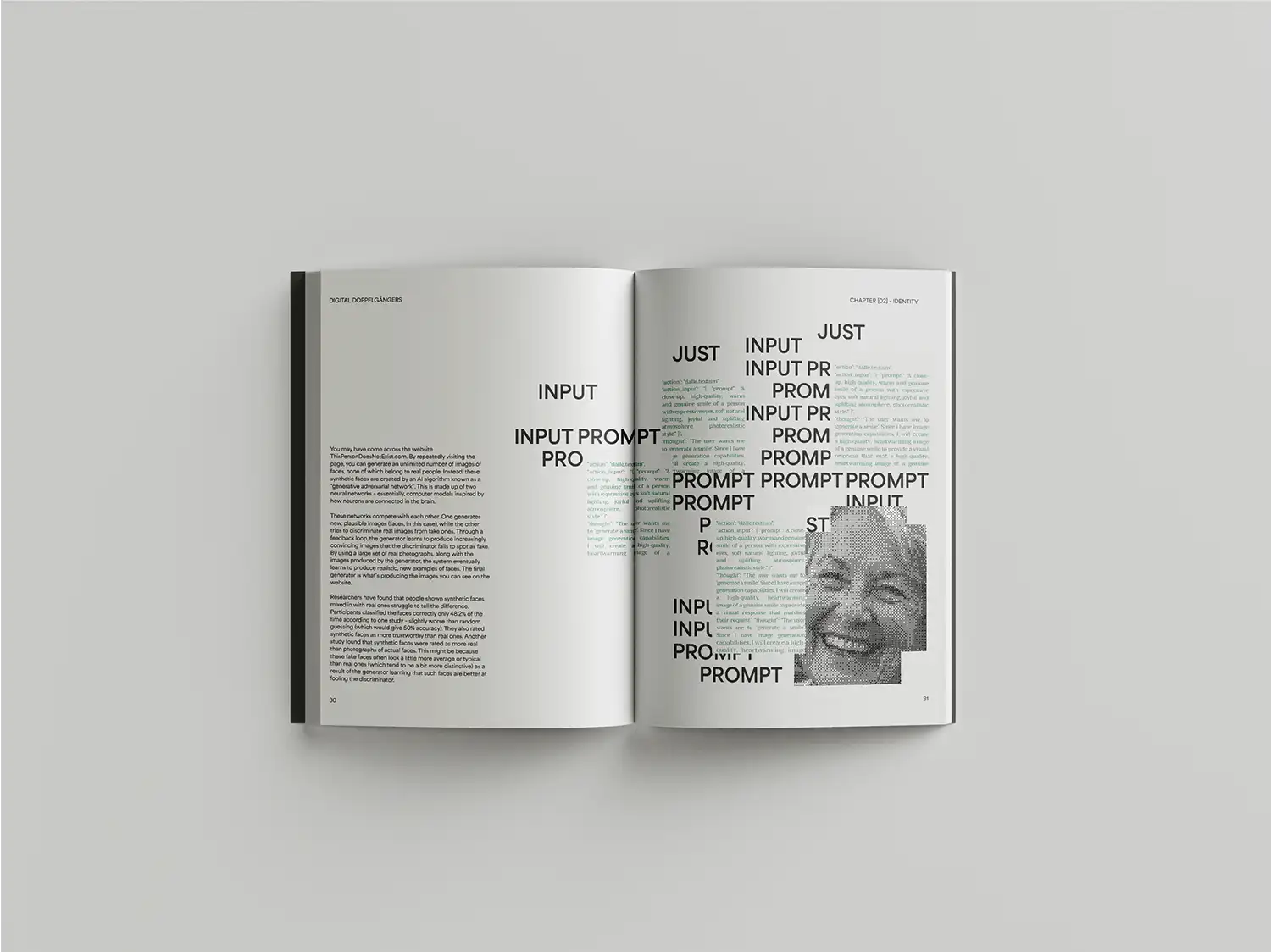
In contemporary digital culture, the idea of the Doppelgänger has taken on a new and unsettling form. Through the use of AI technology combined with personal data theft, risks such as identity manipulation, and loss of data ownership pose a significant threat. Studies show that the Generative AI market is projected to grow by 560% between 2025-2031, reaching $442 billion, making this an issue that is expected to grow exponentially. This shift raises urgent questions about ownership, authenticity, and responsibility in the digital sphere.
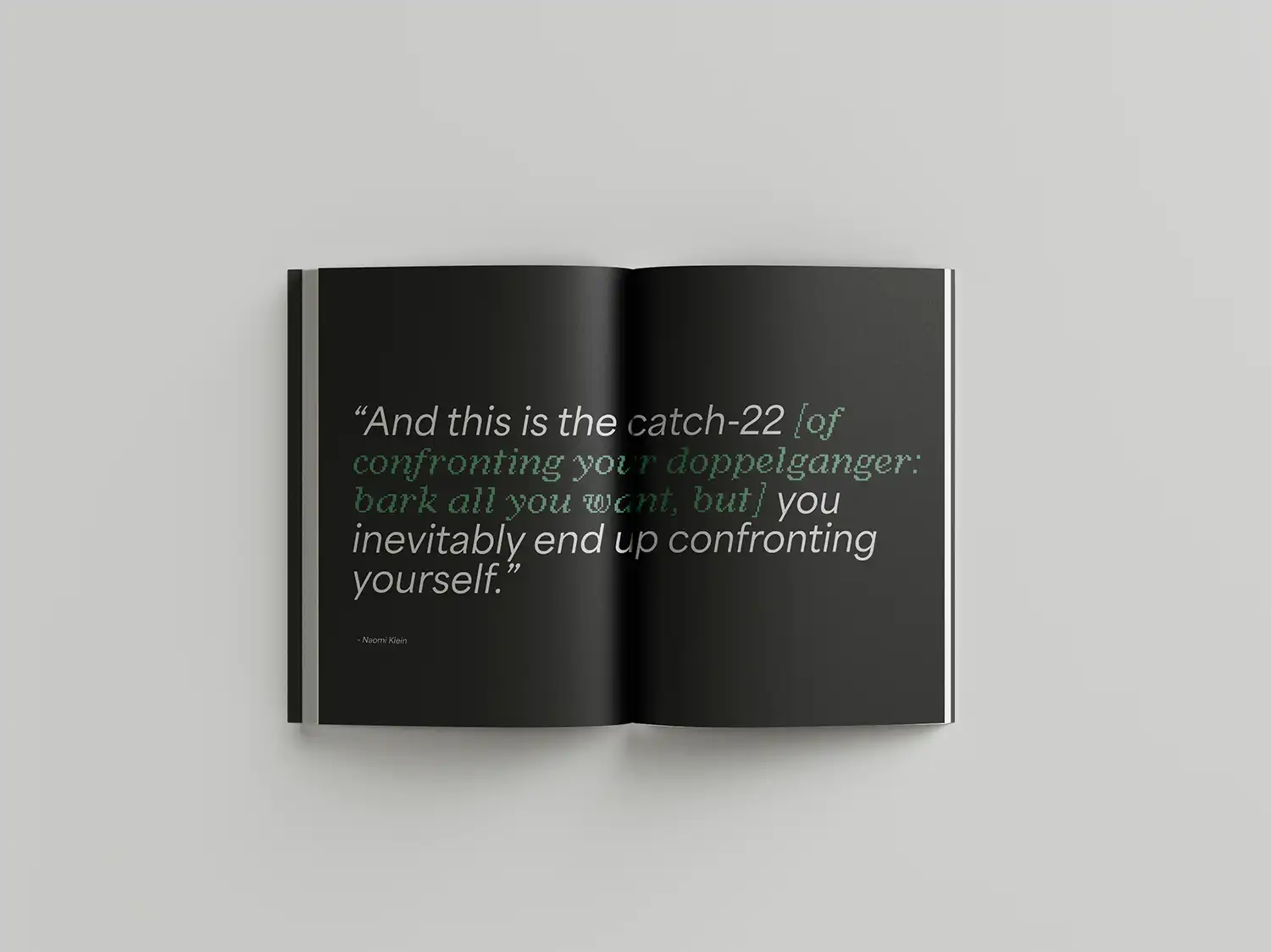
The aim of this publication is to creatively explore and investigate the loss of control over personal identity, data and future in the digital era. While individuals remain accountable for their online presence, they often have little power over how their image or identity is used. The concept of the Digital Doppelgänger acts as a framework for conveying this power imbalance. Through research and creative exploration, this project aims to expose the consequences of identity manipulation and provoke critical reflection on the future of selfhood in digital spaces.
Chroma
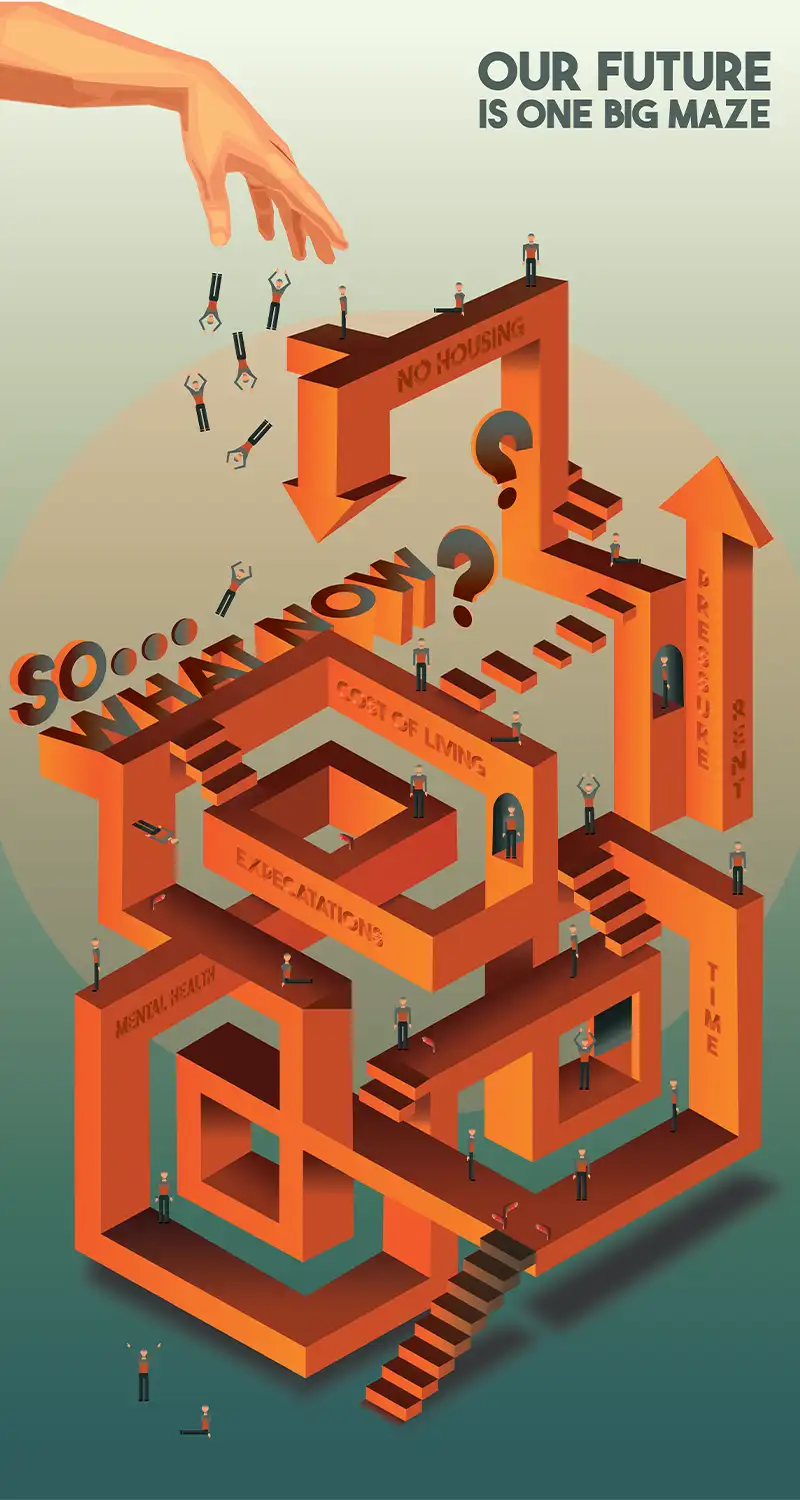
When investigating the overall context as to why Generation Z feels so affected by issues compared to other generations the word ‘existential liminality’ comes into mind. The term ‘existential liminality’ means being in a state of deep personal transition and transformation marked by a disruption of identity, meaning and direction in life. For Gen Z this state of existential liminality is also extremely prolonged or caught in comparison to other generations. Many people of our generation feel like they are in a ‘waiting zone’ when it comes to starting their own life. For Gen Z many milestones have occurred in a strange, liminal-like spaces due to the intergenerational stressors. Taking inspiration from the colour ‘Dark cadmium orange’ this poster translates this feeling to visual form, creating a sense of pressure and displaying displacement.