
-
- Kathy O’Farrell
Kathy
O’Farrell
Queen of Earth Island
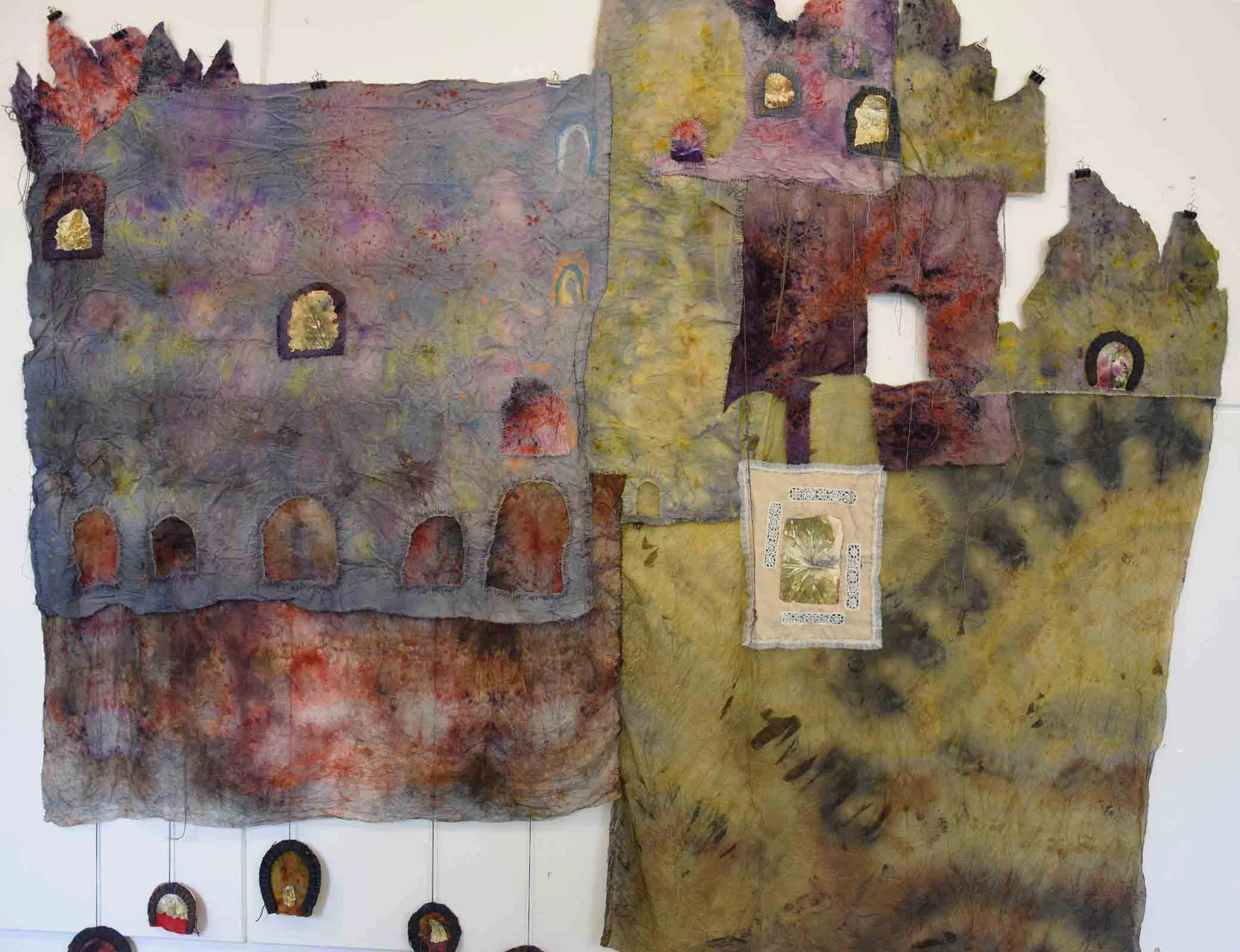
‘Queen of Earth Island’ expands Kathy’s exploration of material as a carrier of memory and place through a more spatial composition. Constructed from eco-dyed textiles, layered surfaces and suspended elements, the work evokes an imagined landscape that exists between ruin and dwelling. Architectural forms emerge through stain and stitch, suggesting both shelter and fragility, a place that is simultaneously held together and falling apart.
The surface is stained through natural dye processes using plant matter, rust and time-based reactions. These processes produce unpredictable marks that mirror erosion and geological change. The work becomes a site where multiple temporalities coexist, all embedded within the material itself.
The title positions the land as both sovereign and maternal. Rather than depicting nature as passive, the work imagines the earth as an active, living presence that holds memory and power. Fragmented structures and stitched interventions suggest an ongoing act of repair, where the landscape is continuously mended yet never fully restored. This reflects an understanding of making as a process of emotional and ecological repair.
Suspended horseshoe forms extend the work into space, introducing elements of ritual, protection and folklore. These objects operate as both symbolic gestures and material traces, grounding the work in traditions of care and inherited knowledge.
Ultimately, it invites reflection on our relationship to land, memory and care, proposing the earth as something that holds and remembers.
The Grass is Always Greener
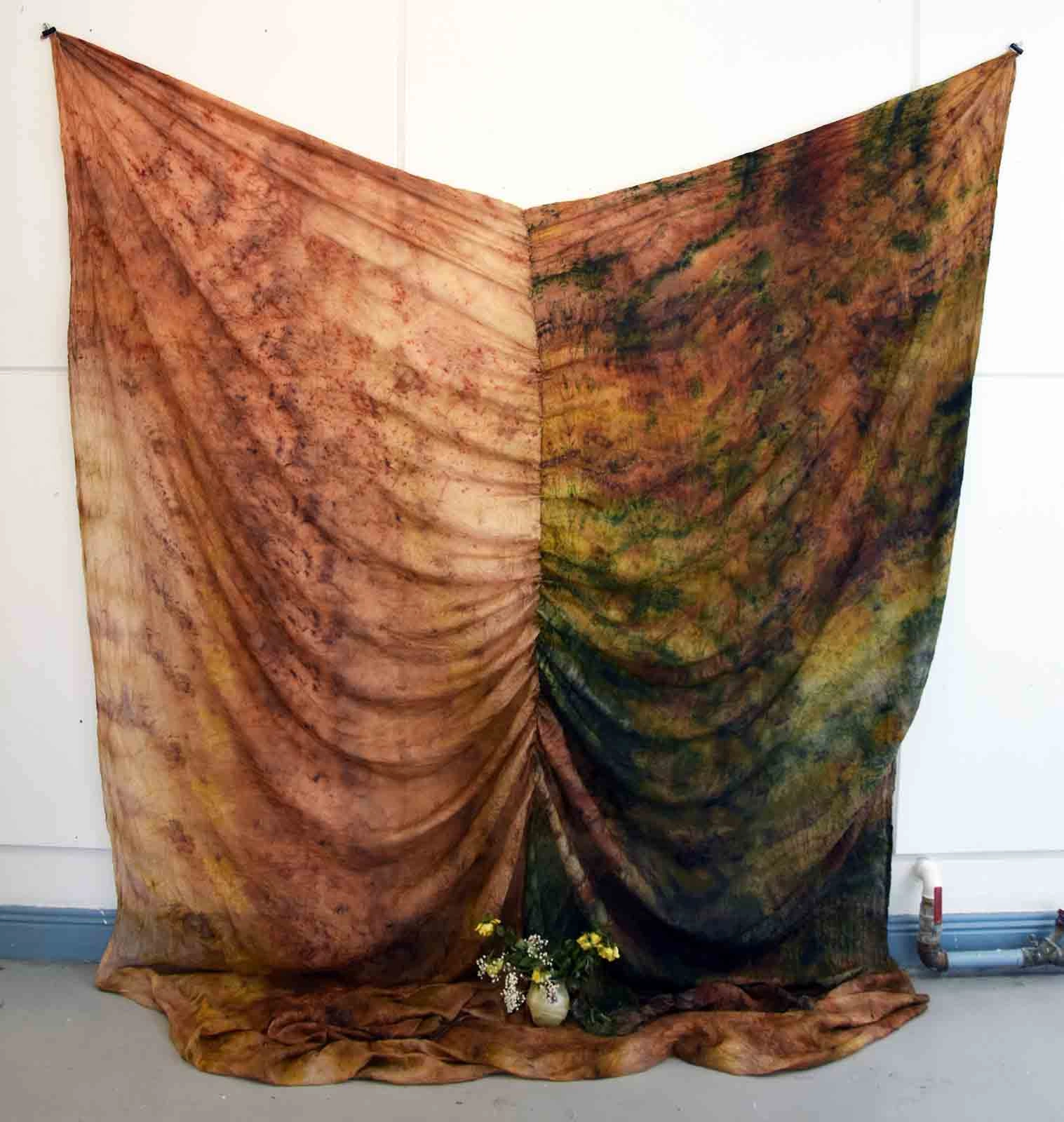
This work emerges from Kathy’s practice of natural dyeing and hand stitching as a form of poetic and embodied research. She approaches making as a way of composing rather than producing, where materials act not as passive surfaces but as active participants. In this piece, earth pigments, plant matter and oxidised marks form a tactile language that speaks through the stains.
The draped silk holds the traces of slow processes, bundling, boiling and waiting, where control is relinquished and material agency takes the lead. The iron-rich tones and organic impressions are records of the interactions between plant, water, heat and fabric. These interactions create a surface that feels held within the elements of the earth.
Hand stitching operates as both a structural and symbolic gesture. Each stitch becomes a repetitive act of attention, repair and care, connecting the artist to matrilineal histories of making. Through this slow rhythm, the work becomes a site of meditation where body and material meet and where making functions as a form of emotional and physical grounding.
Her neurodivergent experience informs this process, shaping the work as a space where attention is practised deliberately, allowing moments of stillness within an otherwise restless internal landscape. In this sense, the piece reflects not only the earth’s capacity to hold, but also a desire to be held within it.
Ultimately, the work invites a sensory encounter, encouraging closeness, touch and recognition through material presence.
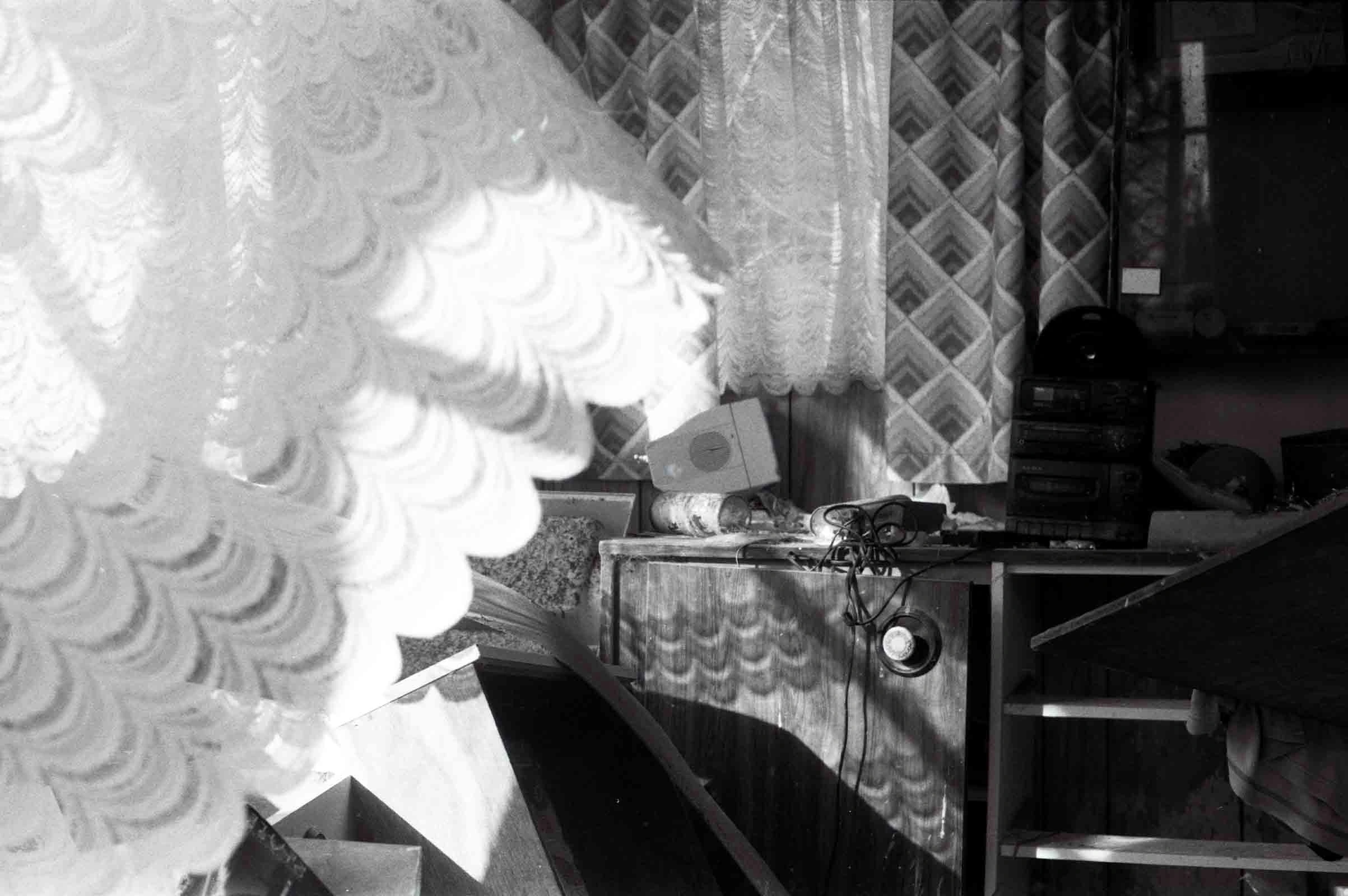
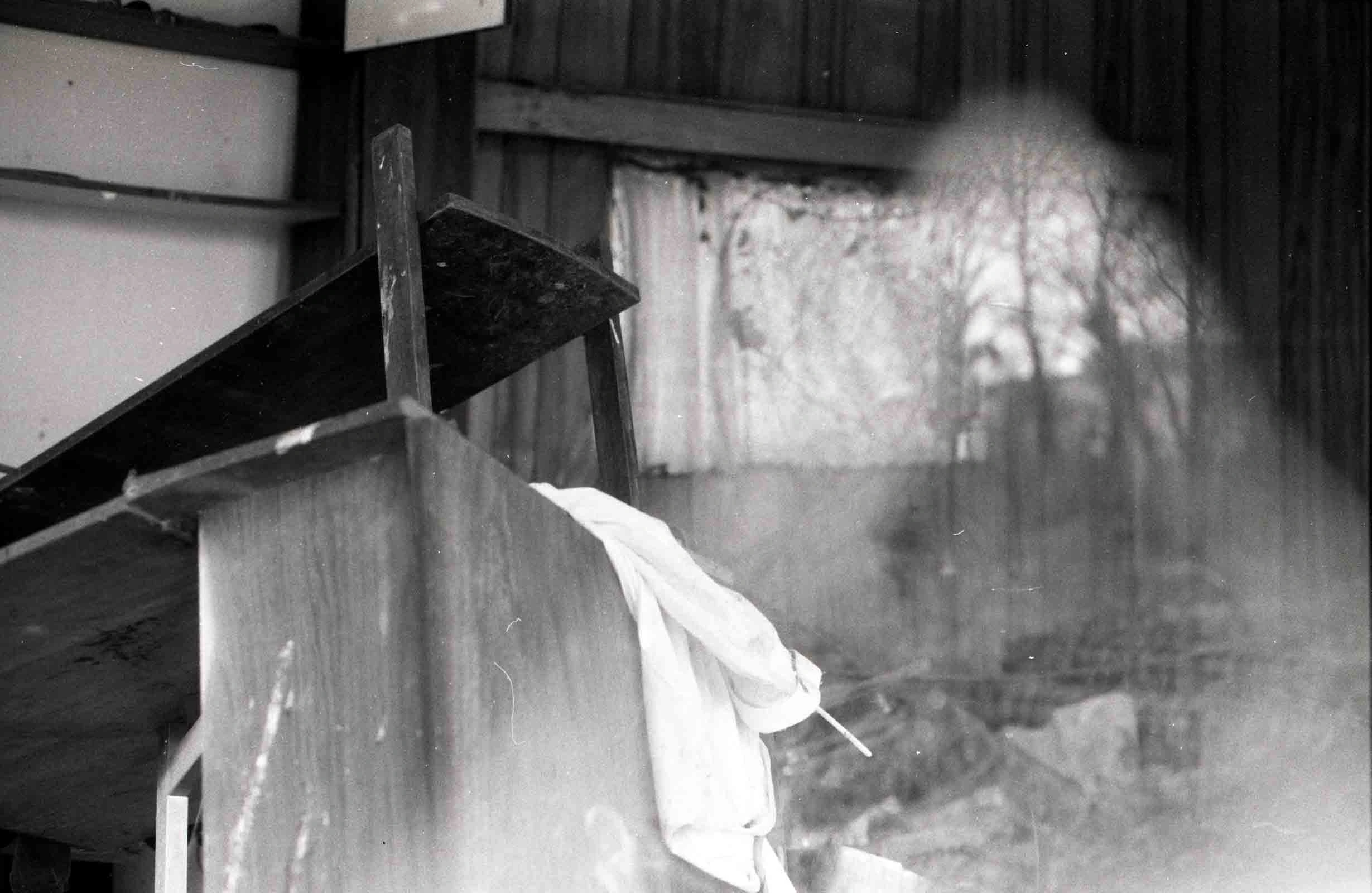
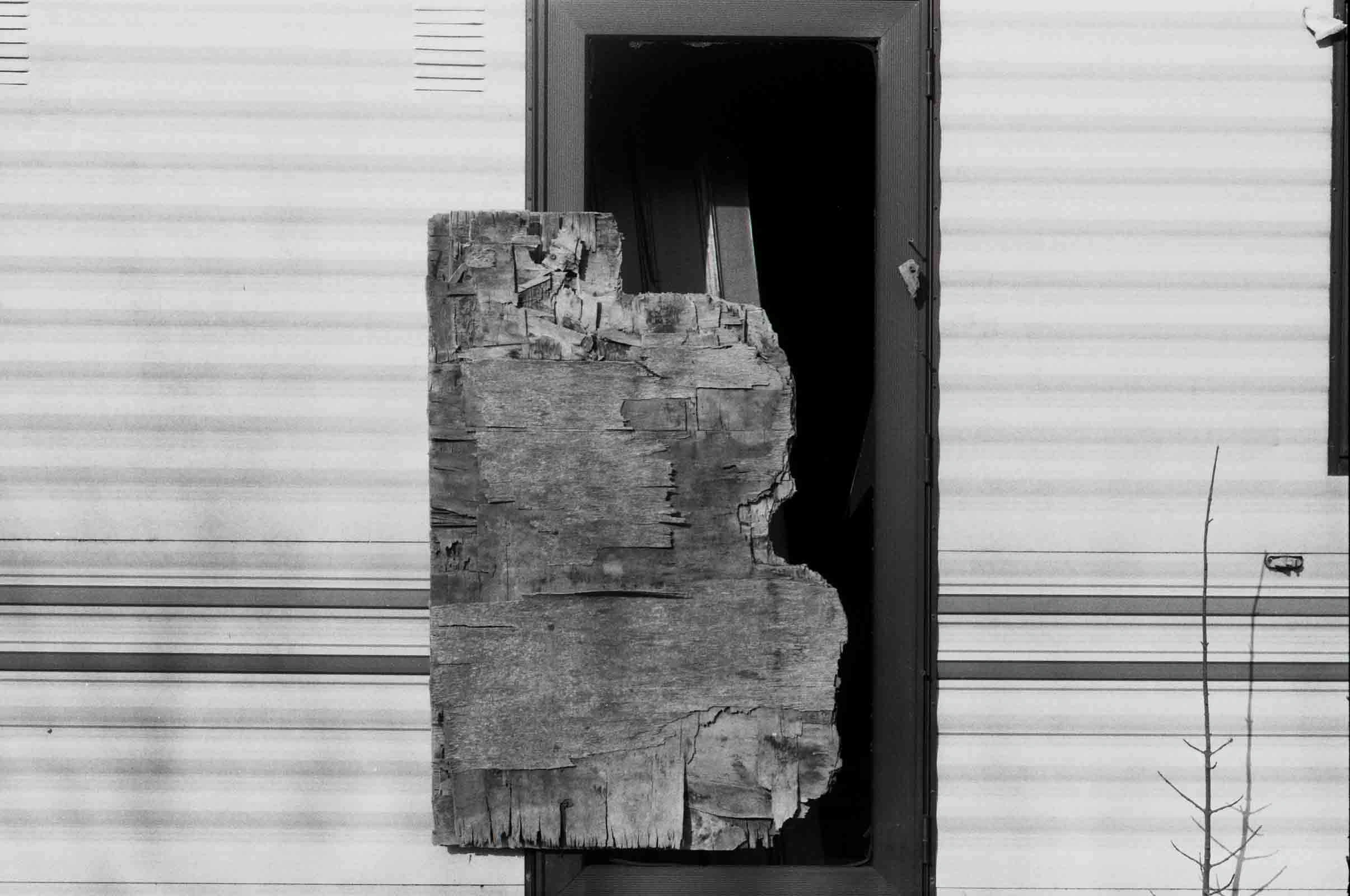
Caravan 1, 2, 3, 4.
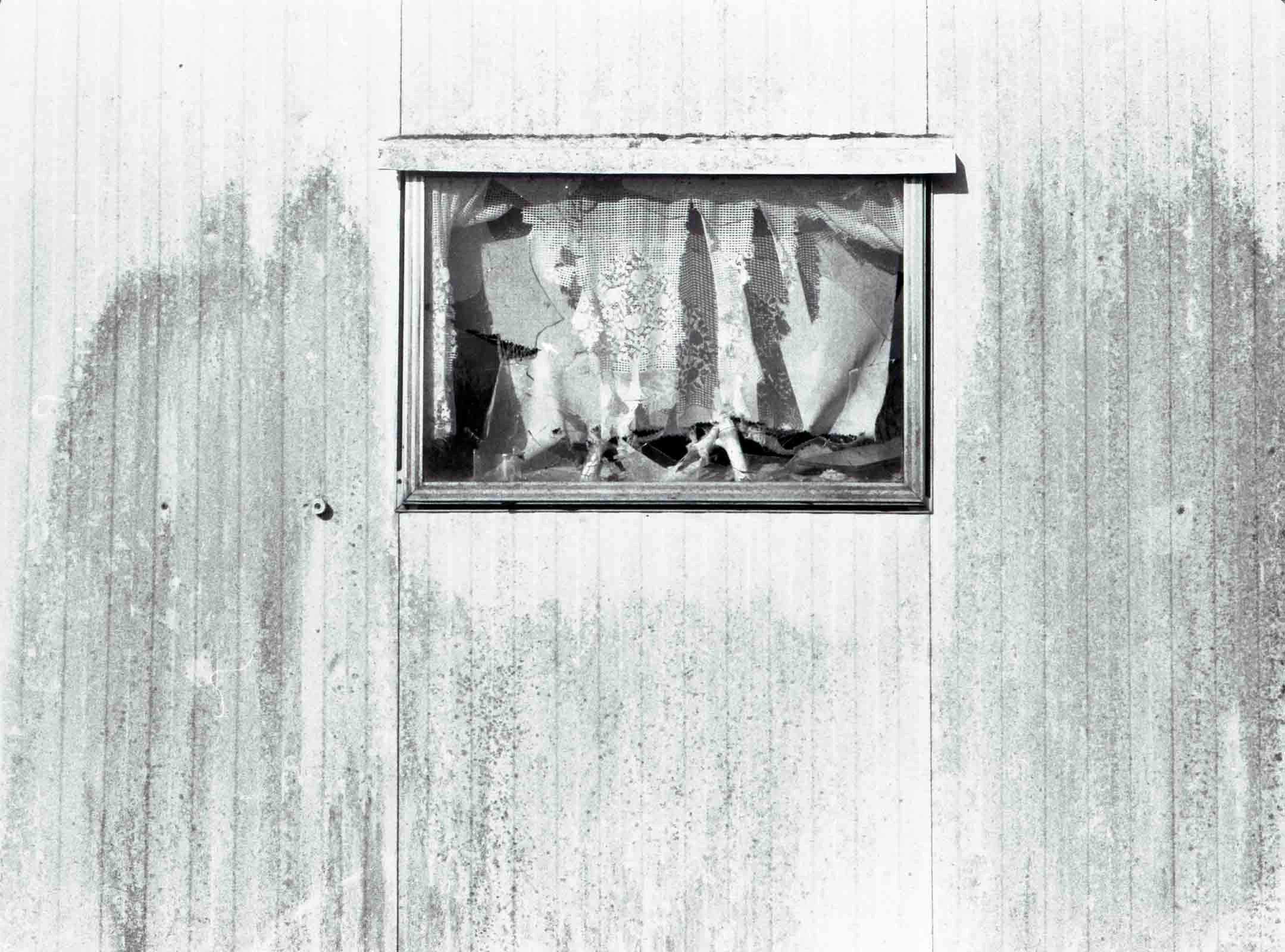
This photographic work explores memory and presence through analogue image-making. Shot on film, the images capture quiet, intimate interiors where light, surface and material interact to produce layered and unstable compositions. Rather than functioning as straightforward documentation, the photographs operate as sites where perception becomes uncertain and time feels suspended.
Within these domestic spaces, curtains, fabric, furniture and everyday objects become active participants in the image. Light filters through lace and glass, imprinting shifting patterns across surfaces, while reflections and shadows create a doubling effect that blurs boundaries between inside and outside, past and present.
The use of analogue film is central to this process. Grain, light leaks and moments of overexposure introduce an element of unpredictability, allowing the materiality of the photograph to mirror the instability of memory. These imperfections are not corrected but embraced, positioning the photograph as an object that records both an image and the conditions of its making.
This work extends Kathy’s wider practice by shifting from tactile textile processes to image-based ones, while maintaining a focus on material agency and temporality. Just as eco printing allows plants and time to leave their mark on fabric, the camera becomes a tool through which light inscribes itself onto film.
Ultimately, the work invites a slow way of looking. It encourages the viewer to sit within the image, noticing subtle shifts of light, texture and atmosphere, and to consider how spaces hold memory even in absence.