
-

- Aoife Dunne
Aoife
Dunne
Connective Tissues: A Cognitive Mapping
Aoife Dunne is interested in the experiences of the body and of the self in interaction with the lived environment. Her interests stem from embodied research as an autistic woman in a disabled body. Influenced by aspects of crip theory and writings on the abject, Aoife’s research-based practice is fundamentally concerned with the space between the body and the self. She is five feet and two inches tall, approximately, and walks with short, flat steps.
Aoife works through drawing, photography, writing, sculpture, sound, and installation.
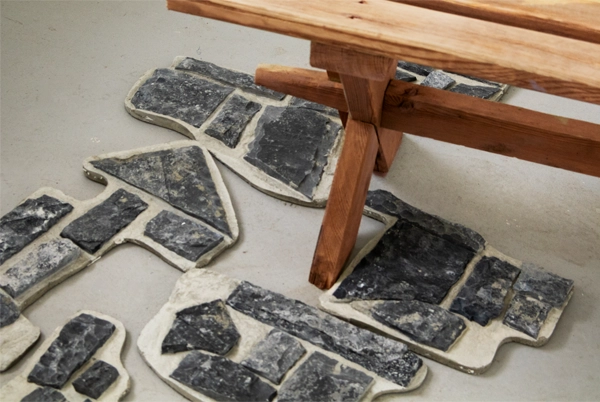
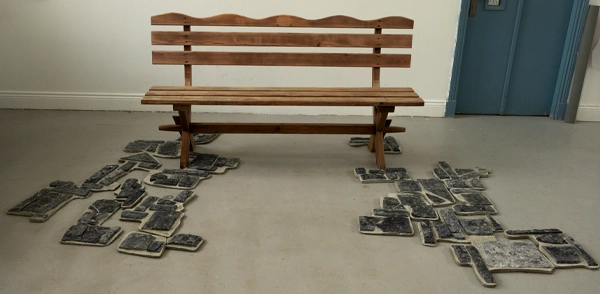
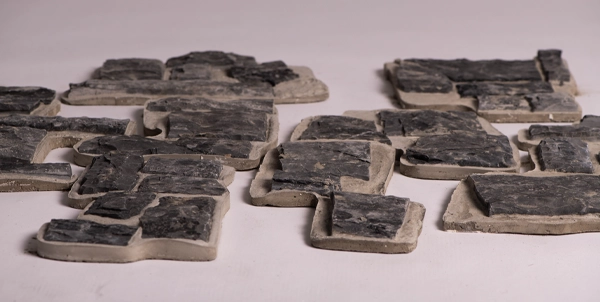
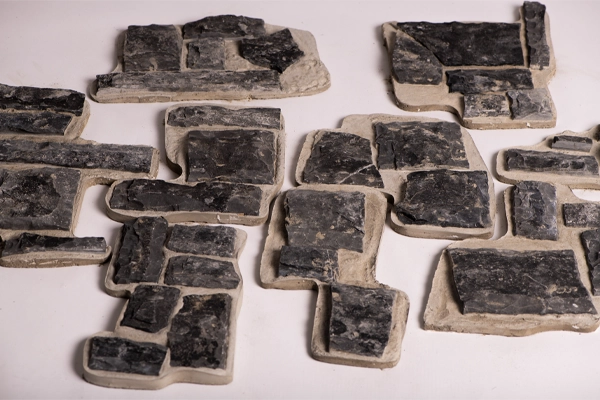
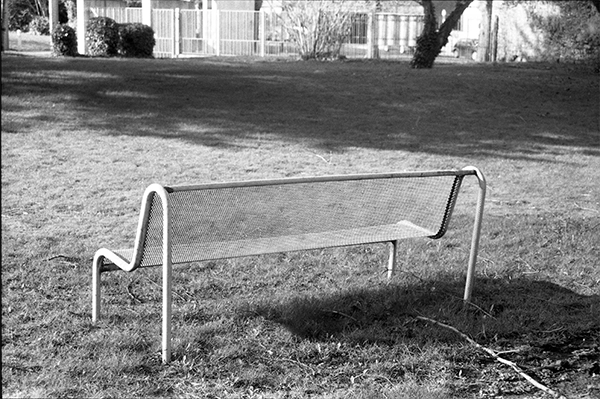
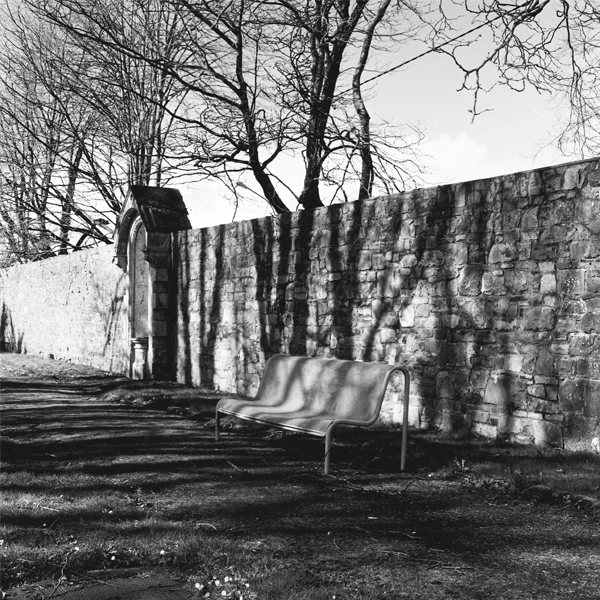
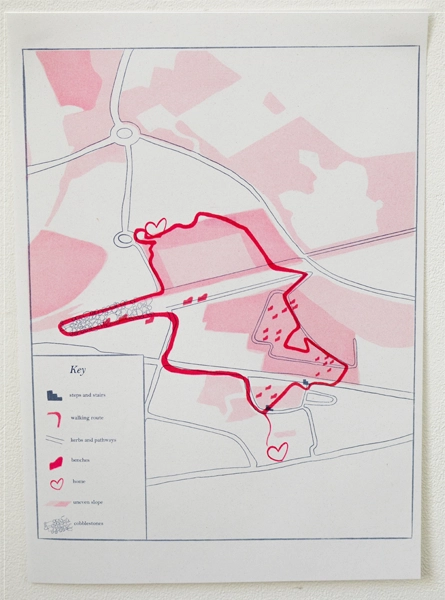
This project is a body of work encapsulating a sound walk, a parallel gallery-based audio installation, sculptural intervention, and a printed publication. It is a meditation on public space, and the movement (or lack thereof) of a disabled body through it. The work reflects on issues of access, and models of conceptualising disabled identity. Aoife draws on conventions of an artist walk and the language of cartography to shed light on the cognitive mapping process involved when she, as a disabled woman, enters public space. Each cobblestone, each kerb, each lonely bench, must be prior noted and planned for.
This work deals indirectly with the artist’s experience of hypermobile type Ehlers Danlos Syndrome, a connective tissue disorder which impacts each area of the body in various ways which may at first seem unconnected. A diagnosis of the condition necessitates an understanding that different areas of the body, though they may seem separate, are intertwined elements in a system, joined by connective tissues. Disparate elements which come together as a whole.
Aoife would like to acknowledge the support of Laois County Council in their donation of a used park bench. She would also like to thank Michael McLoughlin for the loan of headphones and a transmitter.
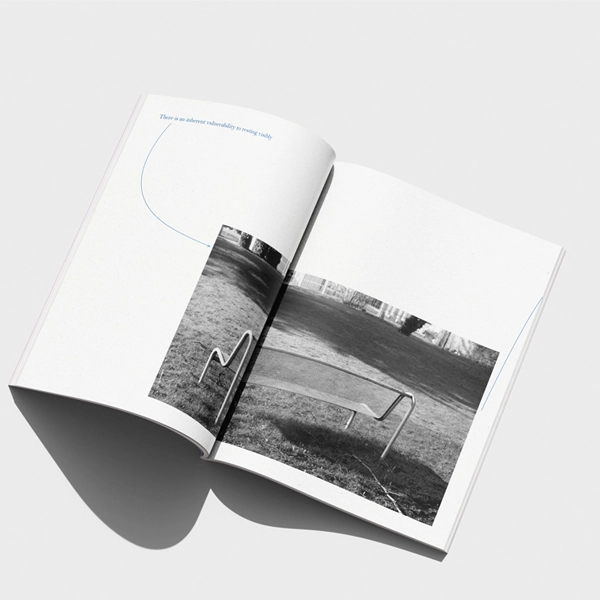
Connective Tissues: A Cognitive Mapping (Publication)
This publication is made in tandem with the gallery installation, and is designed as a supplement to a parallel audio walk. The work reflects on issues of access, and models of conceptualising disabled identity. Aoife draws on
conventions of an artist walk and the language of cartography to shed light on the cognitive mapping process involved when she, as a disabled woman, enters public space. Each cobblestone, each kerb, each lonely bench, must be prior noted and planned for.
The publication links to an audio sound walk which will run as an event during the run time of the degree show (check @sculptureandcombinedmedia on Instagram for further updates). Each copy of the publication includes a risograph printed map of the route taken on the audio walk.
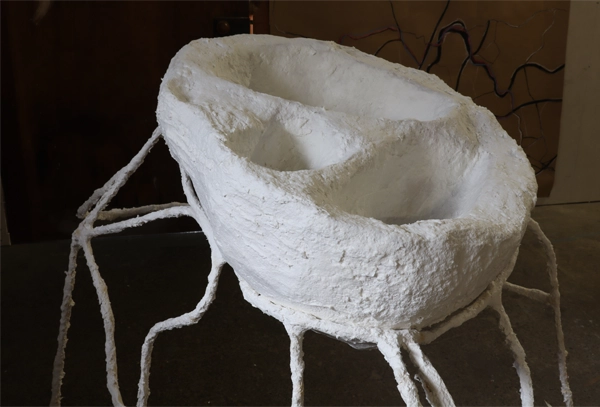
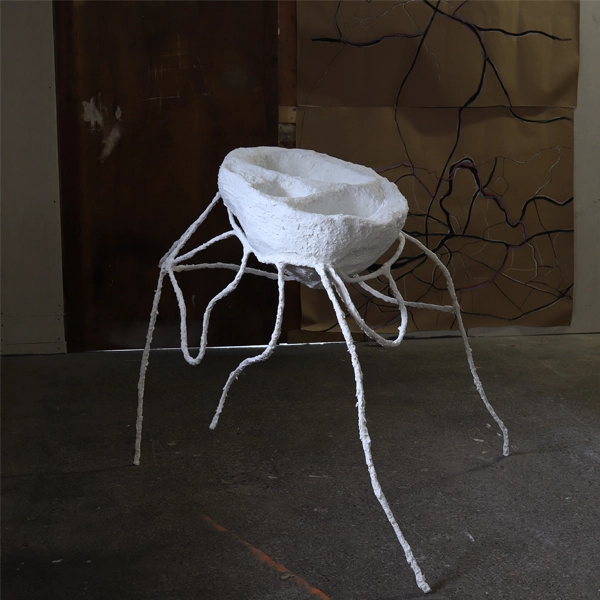
Architectural Model for a Body
This piece was made in two parts- an abstract paper mâché form, and a steel support frame. The support frame was created by tracing the chalk lines formed from maps of the artist’s locality, and bending thin steel rods to fit these
lines, moulding them to form a spidery frame for the paper mâché model to sit upon. The spidery frame immediately conjures feelings of disgust and the uncomfortable unfamiliarity of the uncanny (unheimlich).
The paper mâché form arose from the idea to create an object inspired by an architectural model, where rooms within a building are represented by cavities within a larger form. The overall form, as well as the forms of the cavities, would take their shape from various body map drawings. This drew on the artist’s areas of concern in a non-normative body, as well as interests in architecture and the lived domestic environment. This merging of architectural and bodily forms interrogates what it means to inhabit both body and space as sites of potential home-making.
The final model was created using cardboard and paper covered in a paper mâché paste made using toilet paper- a domestic material which engages with the body. The use of toilet paper and tissue is decidedly grounded in Kristeva’s writings on abjection, where bodily waste is seen as an important example of the casting off of unclean aspects of the self- ‘what goes out of the body, out of its pores and openings, points to the infinitude of the body proper and gives rise to abjection’ (Kristeva, 1982, p. 108). Waste that was once part of the body is now distinct from it, threatening the boundary between the ‘self’ and the ‘not self’, giving rise to the unease of abjection.