
-
- Abbey O’Keeffe
Abbey
O’Keeffe
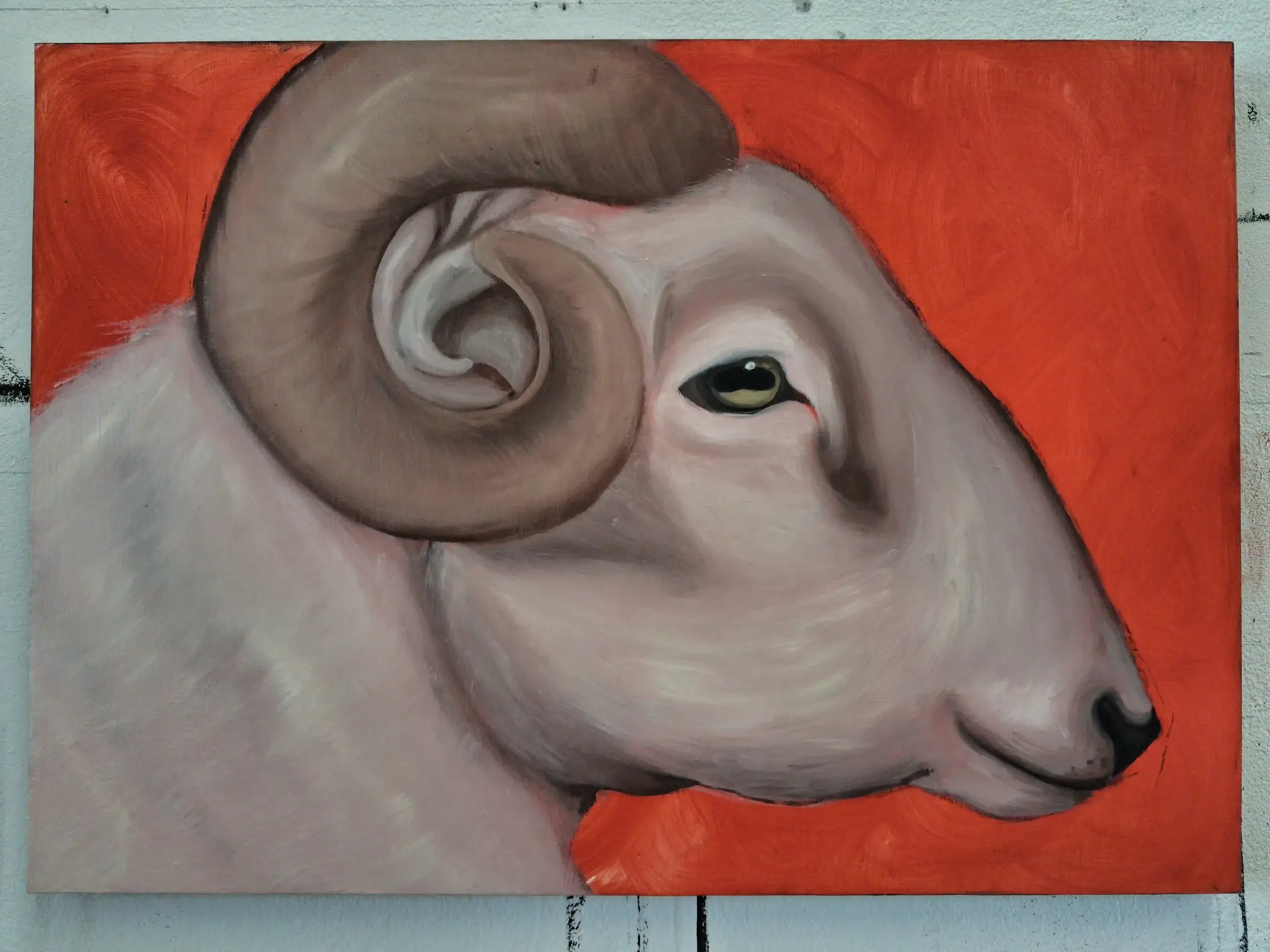
The Weight of Watching
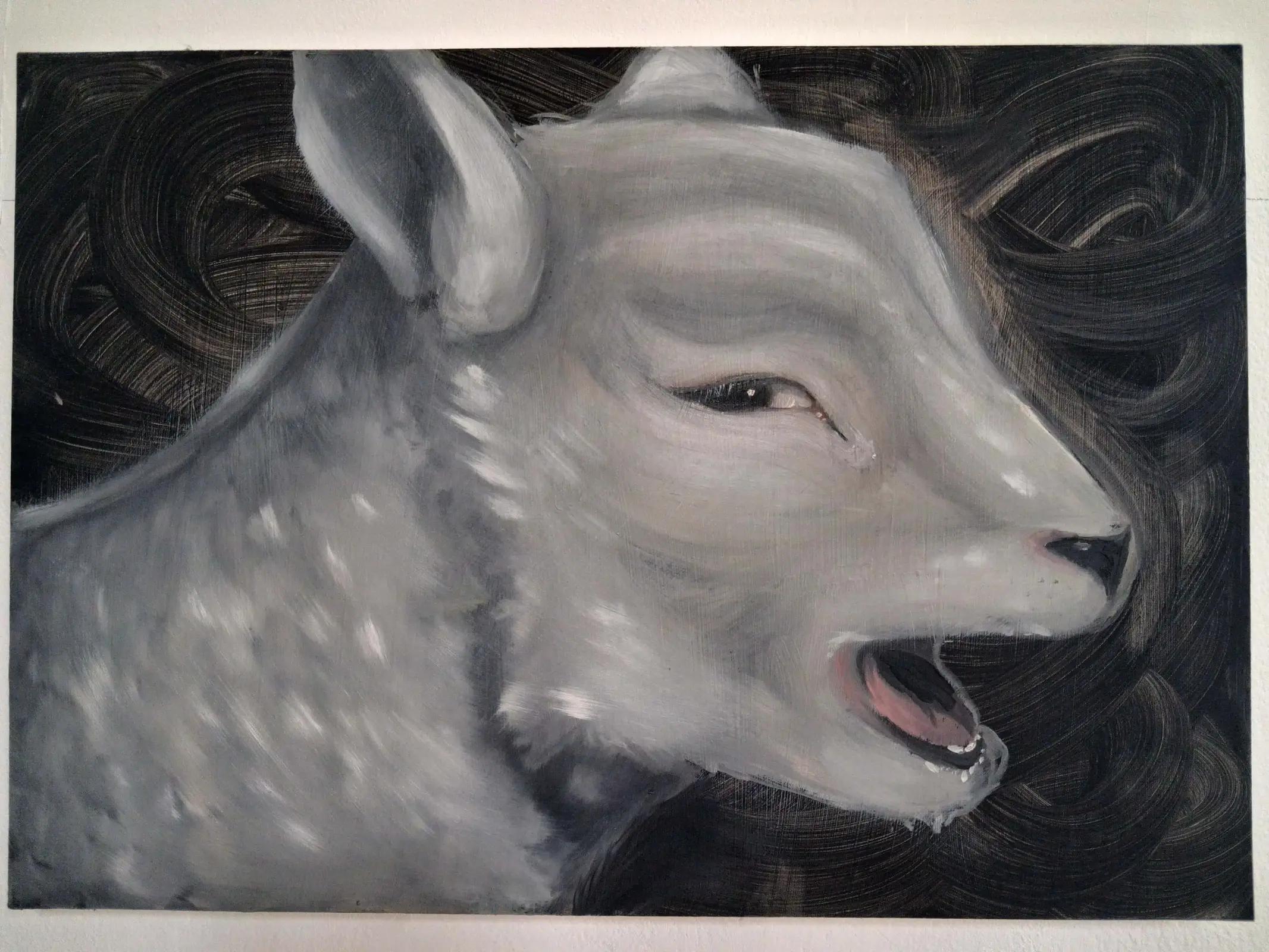
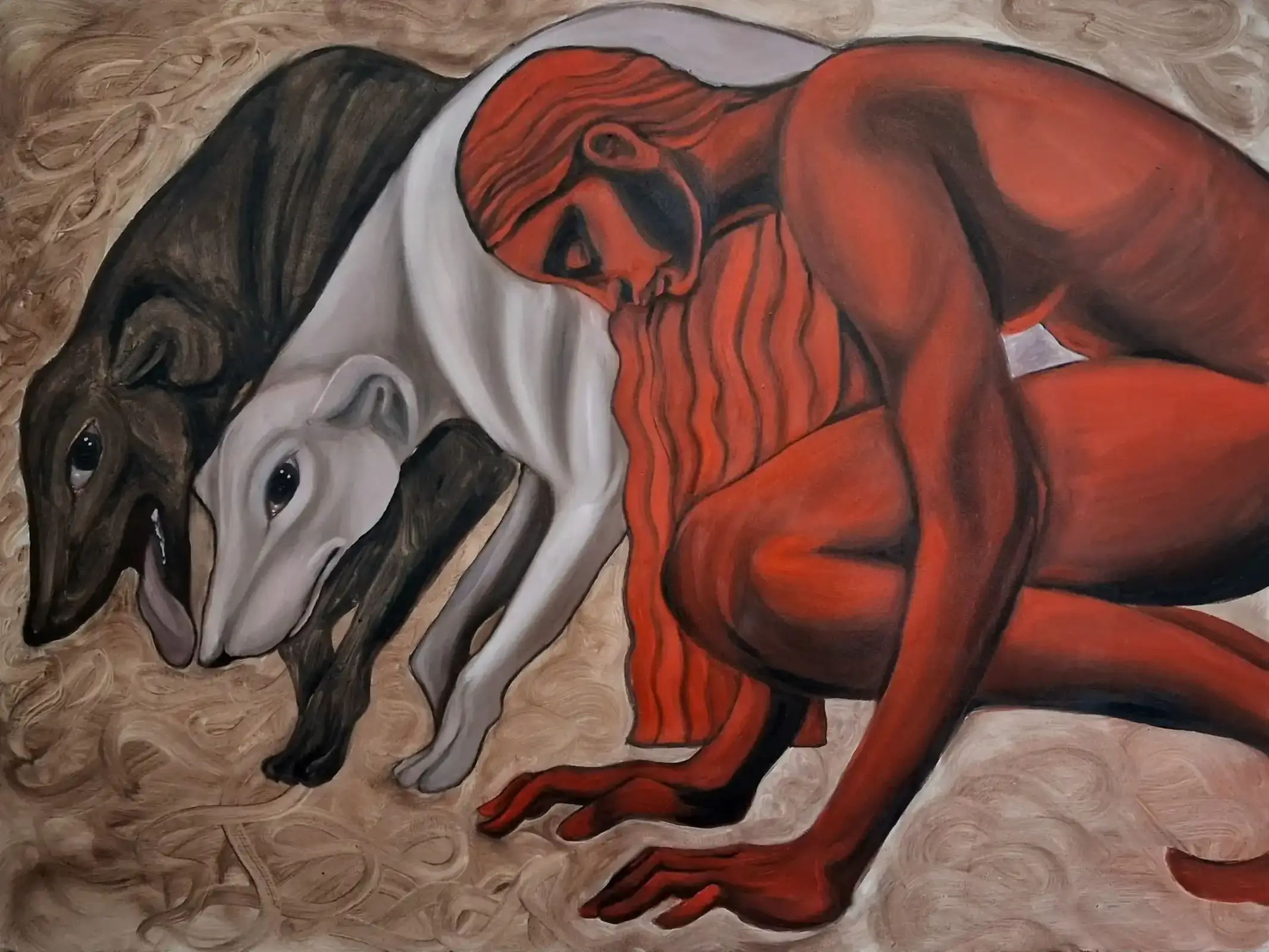
Abbey O’Keeffe’s practice investigates animals as threshold figures, positioned between the tangible world and an imagined, partially inaccessible realm. Working primarily through painting, she constructs compressed, shallow spaces where human and animal forms exist in close proximity, yet remain perceptually misaligned. Drawing on elements of Irish folklore and the Gothic, while resisting direct narrative, her work considers how animals mediate a space that is sensed rather than fully known.
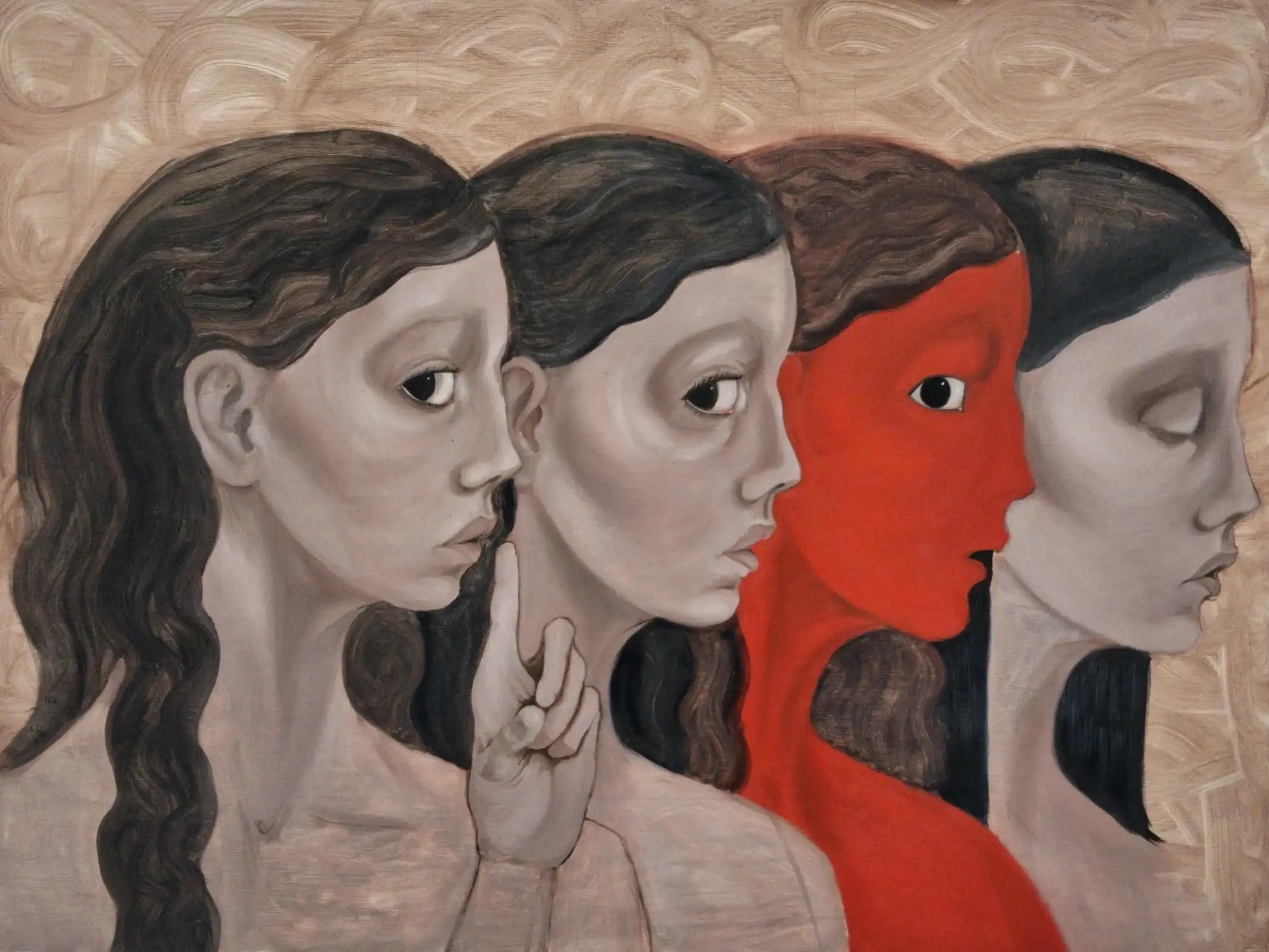
Recurring motifs of horses, dogs, and cattle function not as symbols, but as sites of attention. Their stillness and orientation suggest an awareness beyond the picture plane, often directed toward something withheld from the viewer. Human figures, by contrast, appear in varying states of attunement, listening, distracted, or withdrawn, producing a subtle hierarchy of perception. In more recent work, the introduction of doubling further destabilises the figure, suggesting a split or layered presence within the same spatial field.
Frieze-like compositions and the use of profile reference historical visual structures, in which figures are held against the surface and denied full spatial resolution. This containment sustains a sense of suspended time, where presence is prolonged but never fully resolved.
Colour operates structurally rather than symbolically. Shifts in tone and density, particularly through the restrained use of red and mark making, suggest perceptual intensity rather than emotional expression. Forms emerge, dissolve, and compress within the painted field, reflecting unstable relationships to the threshold that underpins the work.
Across the body of work, a quiet tension is maintained: meaning is not fixed, but felt through proximity, gaze, and the persistent sense that something remains just beyond reach.