
-

- Roisin Ikele
Roisin
Ikele
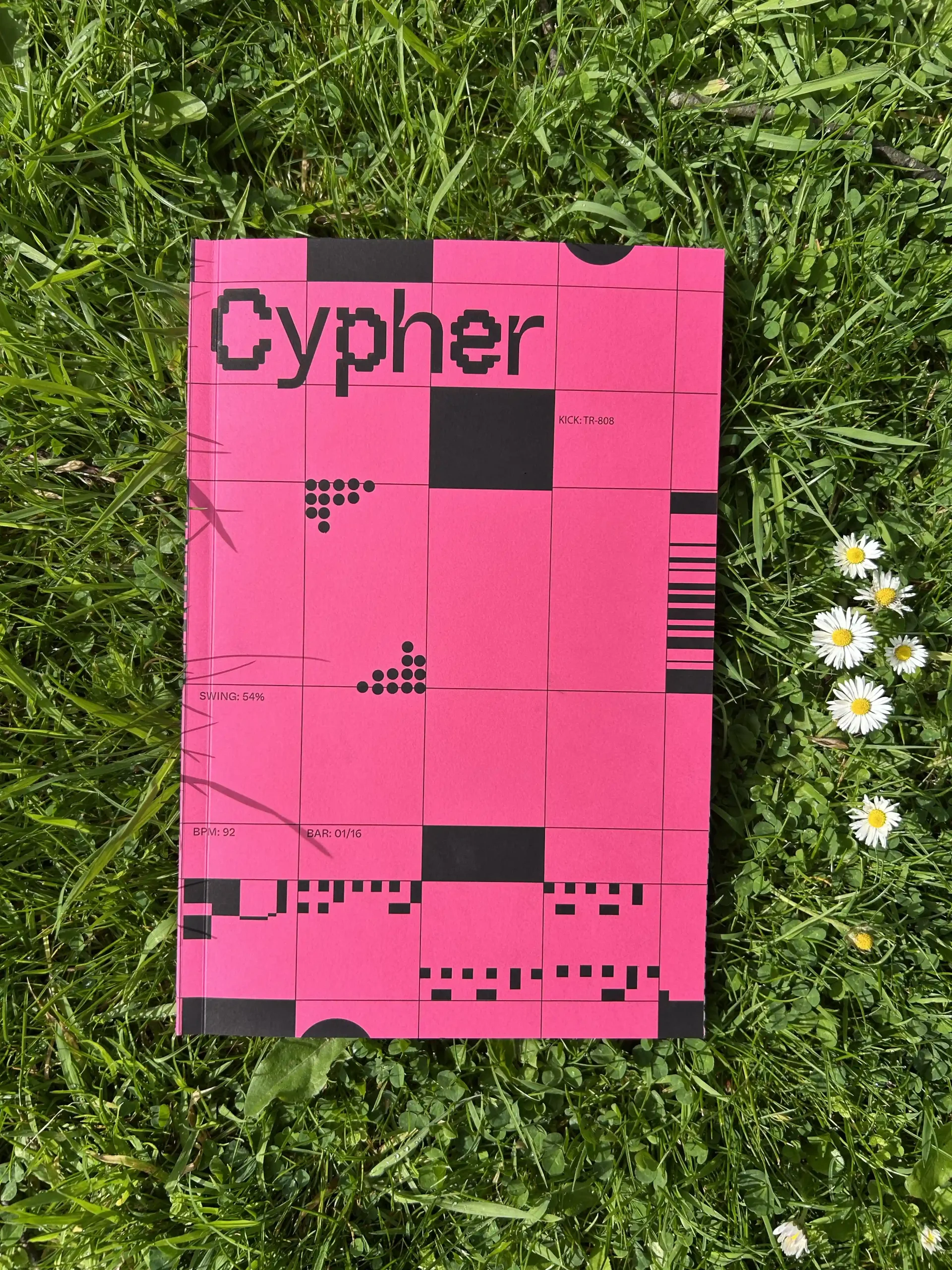

Cypher
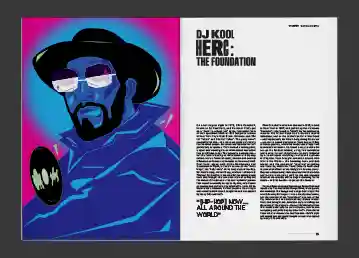
Cypher is a printed publication created to explore hip-hop as more than just music, but as a culture, language, and form of expression rooted in identity, resistance, and community. Through research, interviews, visual storytelling, and historical references, the publication examines how hip-hop emerged from marginalized communities and developed into a global movement that continues to shape conversations around race, politics, youth culture, and self-expression.
A key theme throughout the publication is the idea of ‘street scholarship’, the understanding that knowledge and creativity are not limited to academic spaces, but are also formed through lived experience, storytelling, and cultural practice. The publication explores how lyricism, rhythm, and performance become powerful tools for communication, allowing artists to speak openly about identity, inequality, and social issues in authentic and impactful ways. Alongside the global history of hip-hop, the publication highlights the rise of Irish hip-hop and how artists are reshaping the genre through local accents, slang, politics, and personal experiences. Overall, this publication celebrates hip-hop as a creative and cultural force that continues to inspire people across generations and borders.
Be a Game Changer
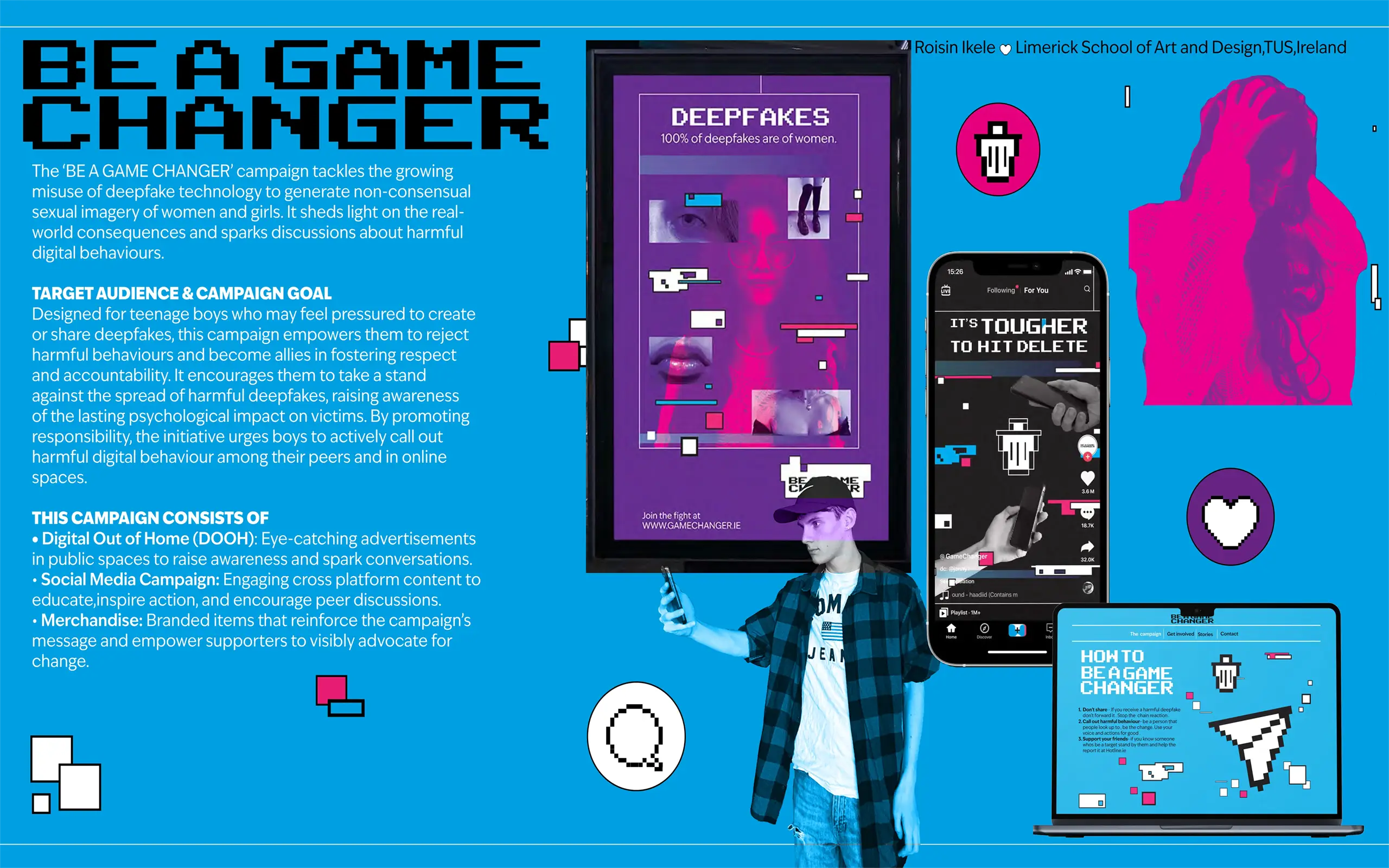
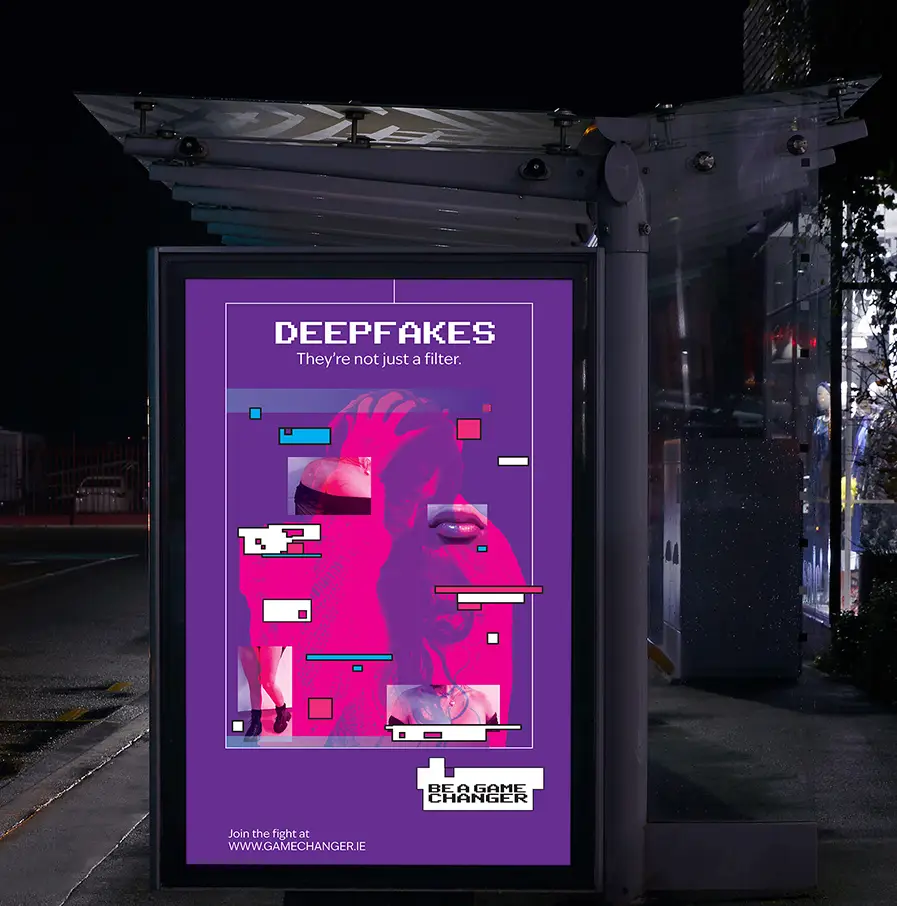
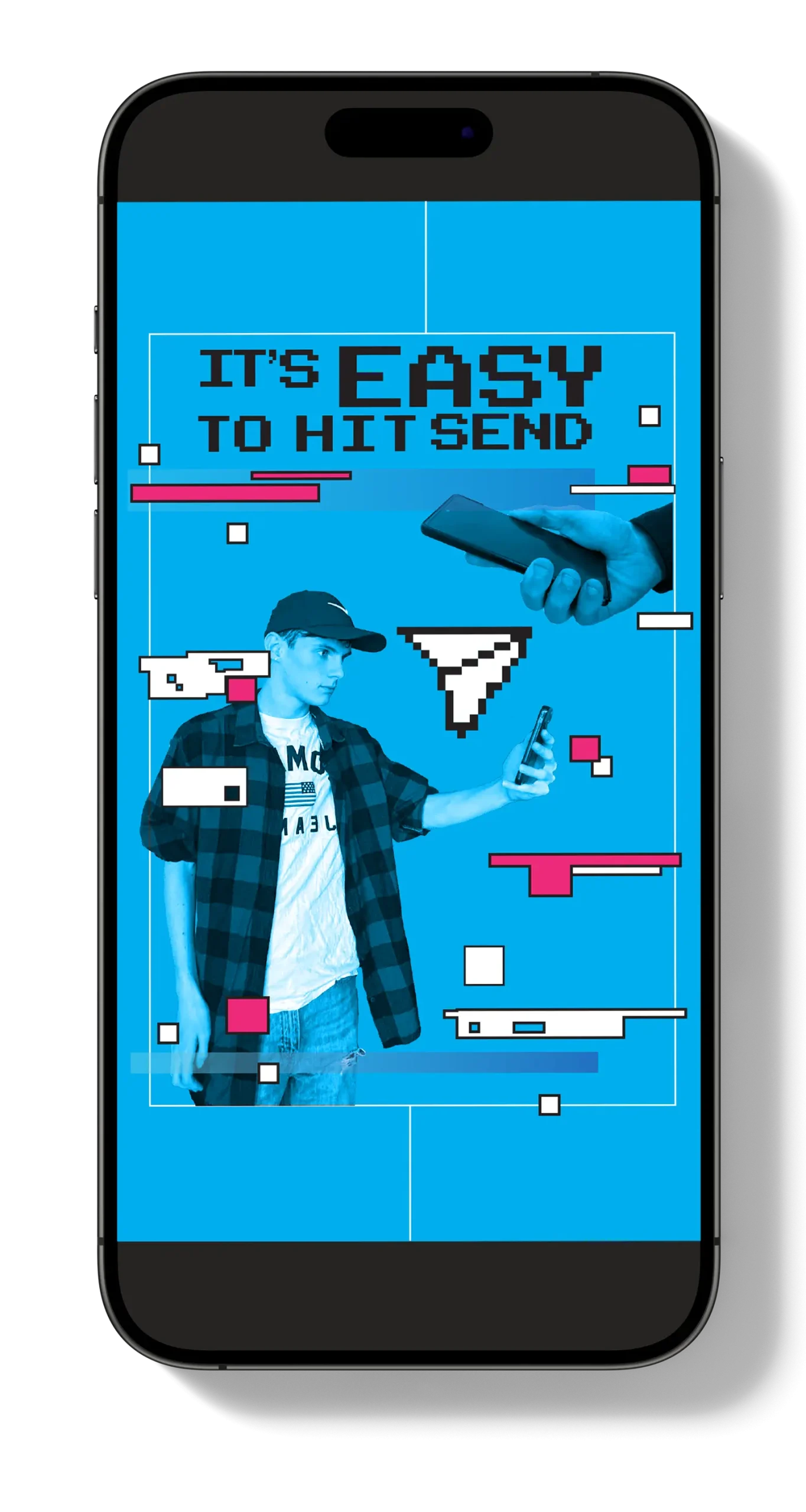
Be a Game Changer, is a social impact campaign created for Creative Conscience 2025 that confronts the rising misuse of deepfake technology to generate and spread non-consensual sexual imagery of women and girls. As artificial intelligence becomes increasingly accessible, harmful digital behaviours such as image manipulation, online harassment, and the sharing of exploitative content are becoming more common among young people. This campaign aims to challenge those behaviours by raising awareness of the real-life emotional, psychological, and social consequences experienced by victims.
The campaign is specifically targeted at teenage boys, a group often exposed to peer pressure, online trends, and digital cultures that can normalise harmful behaviour. Rather than using shame or blame, Be A Game Changer encourages young men to become active allies in creating safer and more respectful online spaces. It empowers them to reject the creation and sharing of harmful deepfakes, recognise the serious impact these actions can have, and take responsibility for their role within online communities.
Through bold messaging and relatable storytelling, the campaign promotes empathy, accountability, and digital responsibility. It encourages boys to speak up when they witness abusive behaviour online, challenge toxic attitudes among peers, and understand that real strength comes from respect and integrity. By reframing positive action as courageous and influential, Be A Game Changer inspires young people to become leaders who help shape a healthier digital culture.
Ultimately, the campaign seeks to spark important conversations around consent, technology, and online ethics while encouraging behavioural change. It highlights that every individual has the power to make a difference and that choosing to stand against exploitation and abuse online can have a lasting positive impact on others.
Aggregation & Curation
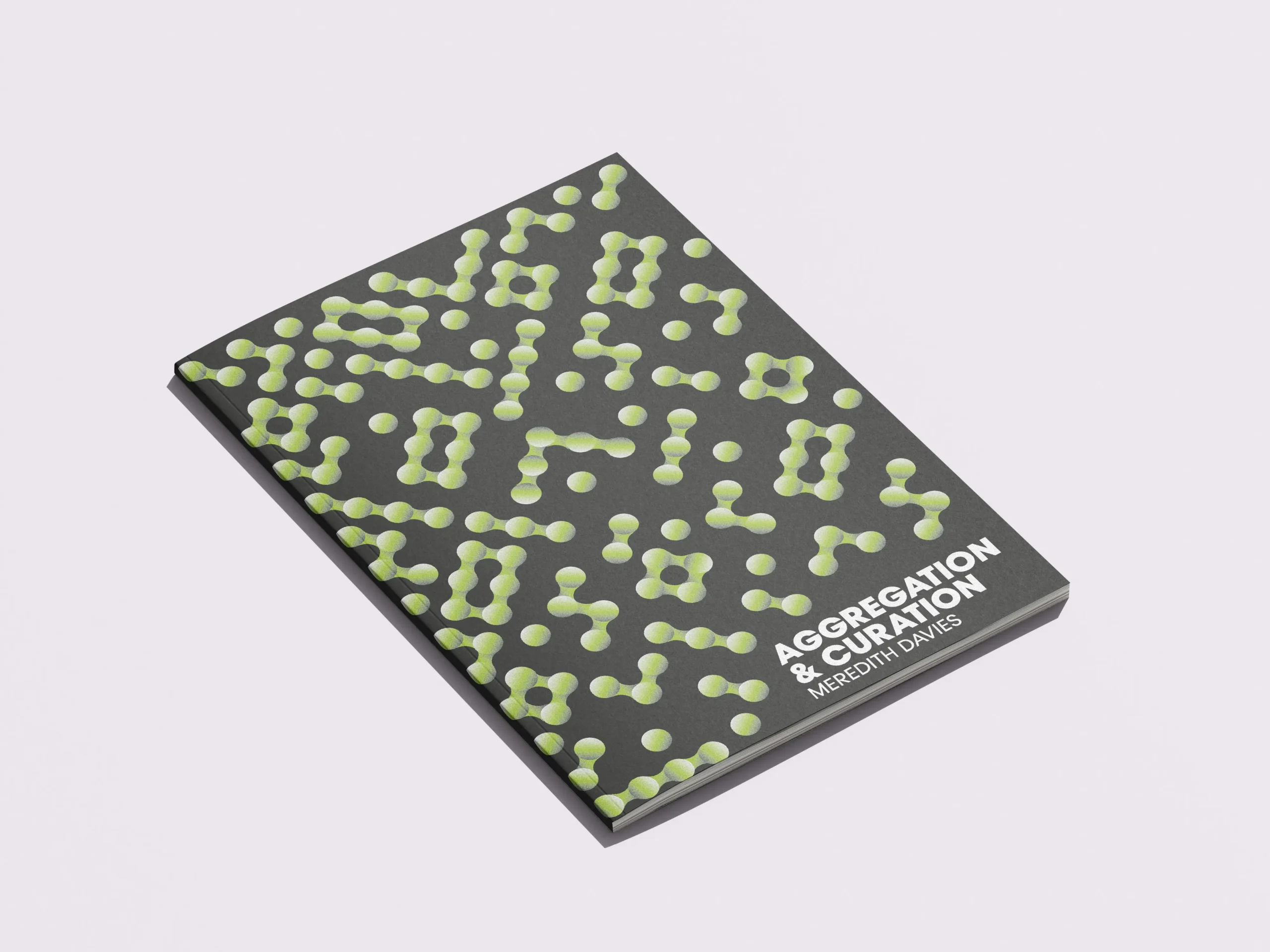
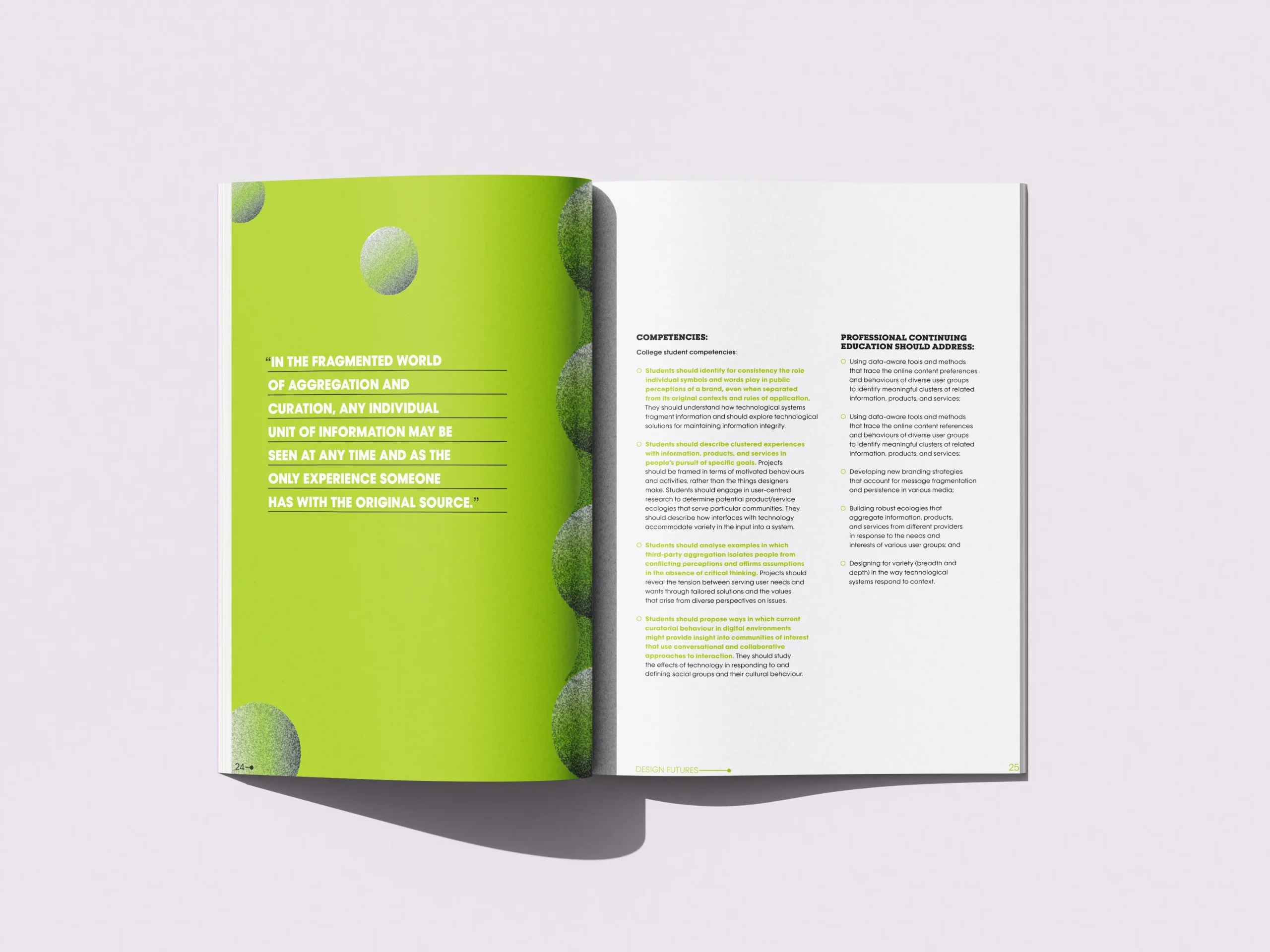
This publication looks at how algorithms are becoming more tailored to consumers, using personal data to shape the content we see, the products we are shown, and the choices we make online. As platforms learn more about user behaviour, their systems become more personalised, creating individual digital experiences for each person.
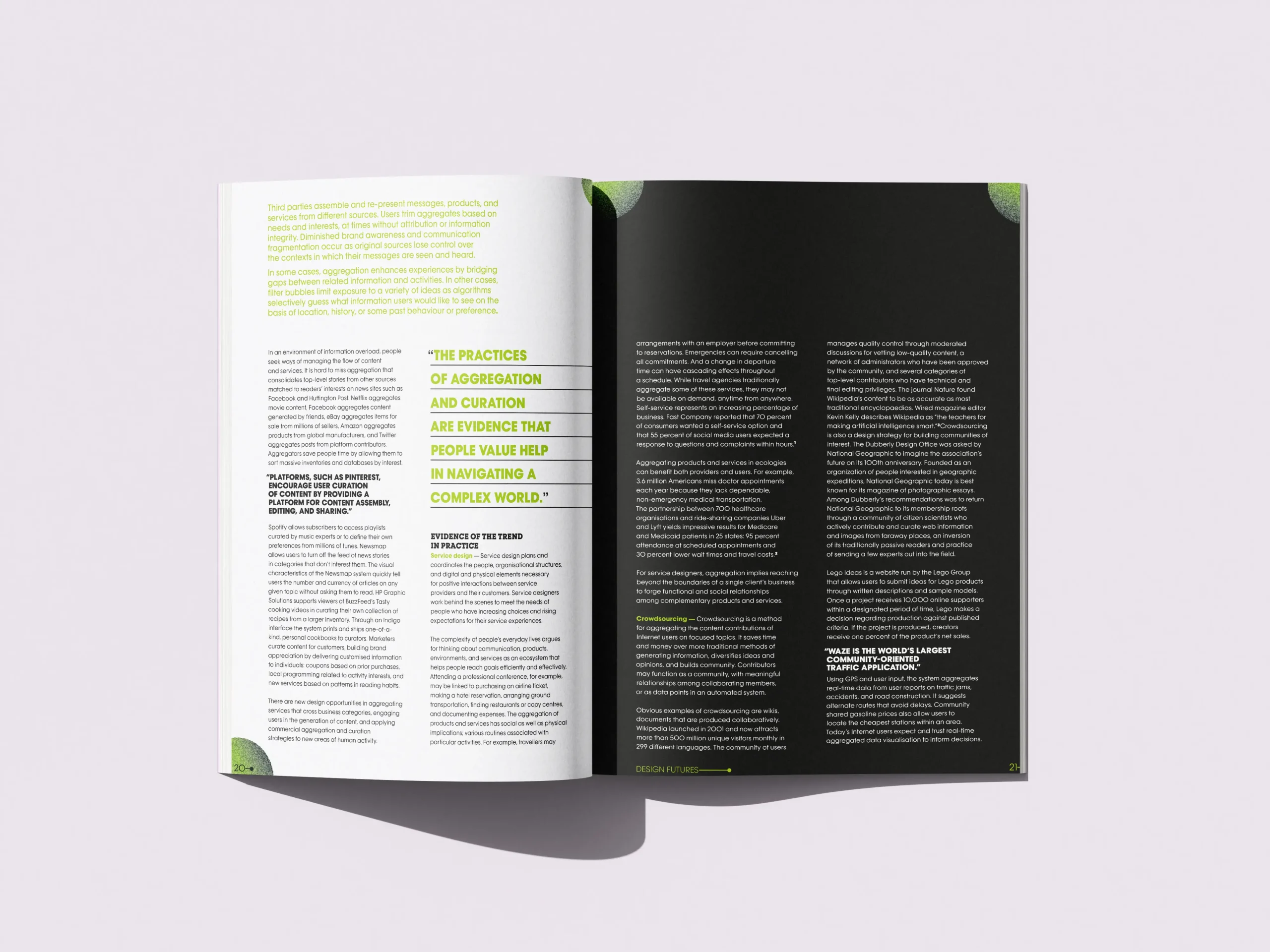
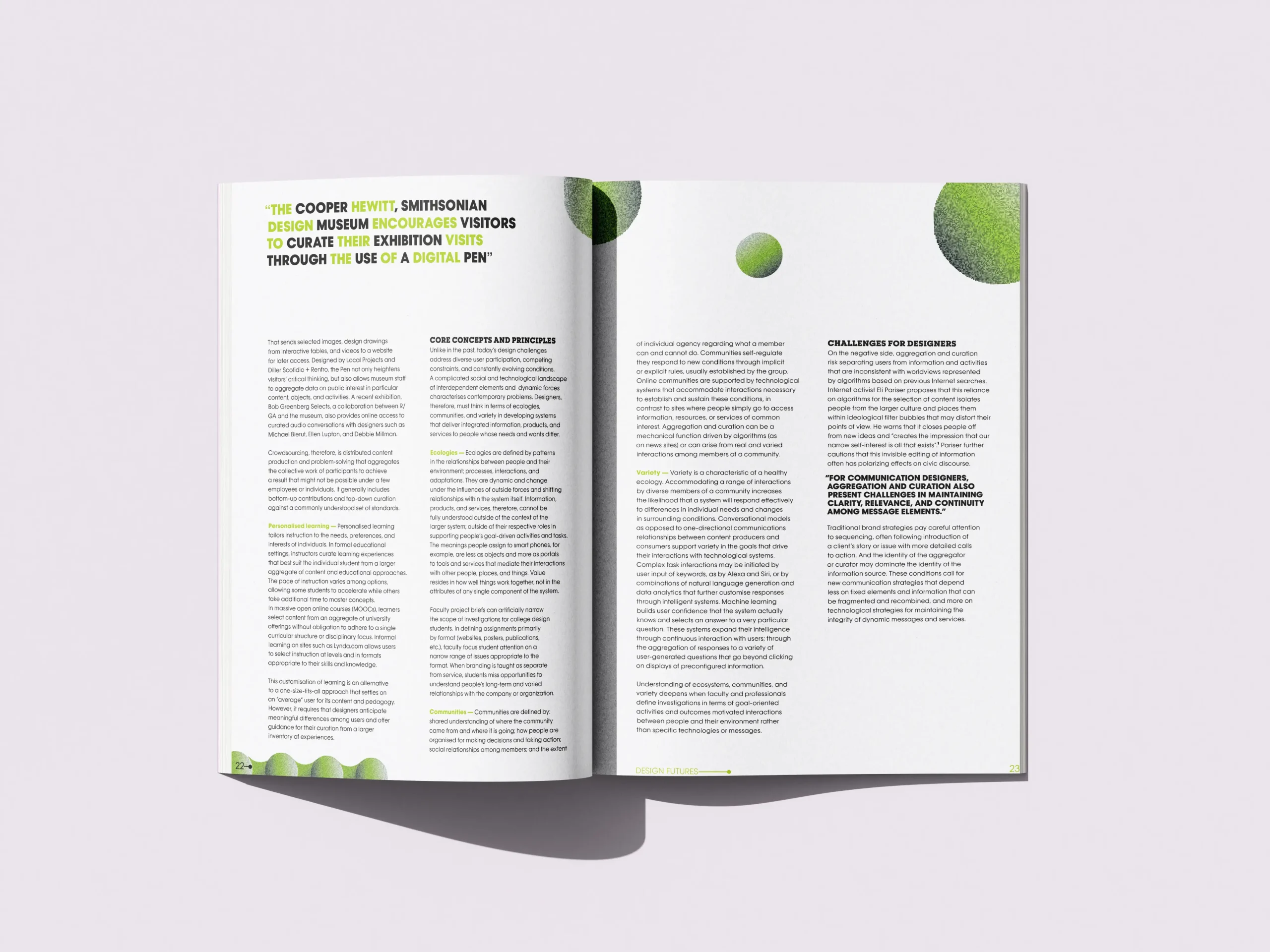
The visual language responds to this idea by drawing on the aesthetics of data systems, networks, and coded structures. The repeated green circular forms work like data points or nodes, linking together in changing patterns across the cover and spreads. These forms represent how information is constantly collected, sorted, and reorganised through algorithmic processes. Their structured layout reflects automation and machine logic, while the softer organic shapes suggest systems that grow and adapt over time through interaction.
A limited colour palette of green, black, and white was used to create a clean technological feel. The bright green references digital signals, activity, and data flow, while the dark background hints at the hidden processes operating behind screens. This contrast helps the patterns stand out and keeps attention on the visual system itself. Typography is bold and clear, helping balance the more complex graphic elements while reinforcing a modern digital aesthetic. Overall, the design mirrors the article’s topic by turning invisible algorithmic systems into visible forms, showing how data is aggregated and curated to create personalised consumer experiences.