
-

- Brónagh Tully
Making Research Matter: Student Engagement with Artist Research in Senior Cycle Art
Artist research is a central component of art education, yet it is often experienced by students as a disconnected, written task rather than an active part of creative practice. This can result in limited engagement and difficulty in applying research to personal work. Within classroom settings, students frequently demonstrate an ability to discuss artists informally, but struggle to translate this understanding into meaningful analysis or practical decision-making.
This project emerged from a need to reconsider how artist research is structured and delivered in the art classroom. Rather than treating research as a separate activity, the focus is placed on embedding it within the making process, allowing students to engage with artist references as a tool for developing ideas, exploring materials, and refining outcomes. This approach reflects constructivist perspectives on learning, where understanding develops through active engagement and experience (Lev Vygotsky, 1978; John Dewey, 1938).
Particular attention is given to the use of contemporary artist references, which can offer more accessible and relevant points of connection for students. When students encounter work that reflects familiar themes, materials, or visual language, they are more likely to engage with it in a meaningful way. This approach supports greater confidence and encourages more experimental and independent responses.
The project explores how adjustments in task design, guidance, and the integration of research within practice can influence student engagement. By repositioning artist research as an active and purposeful part of making, it aims to support more confident, informed, and reflective approaches to creative work.
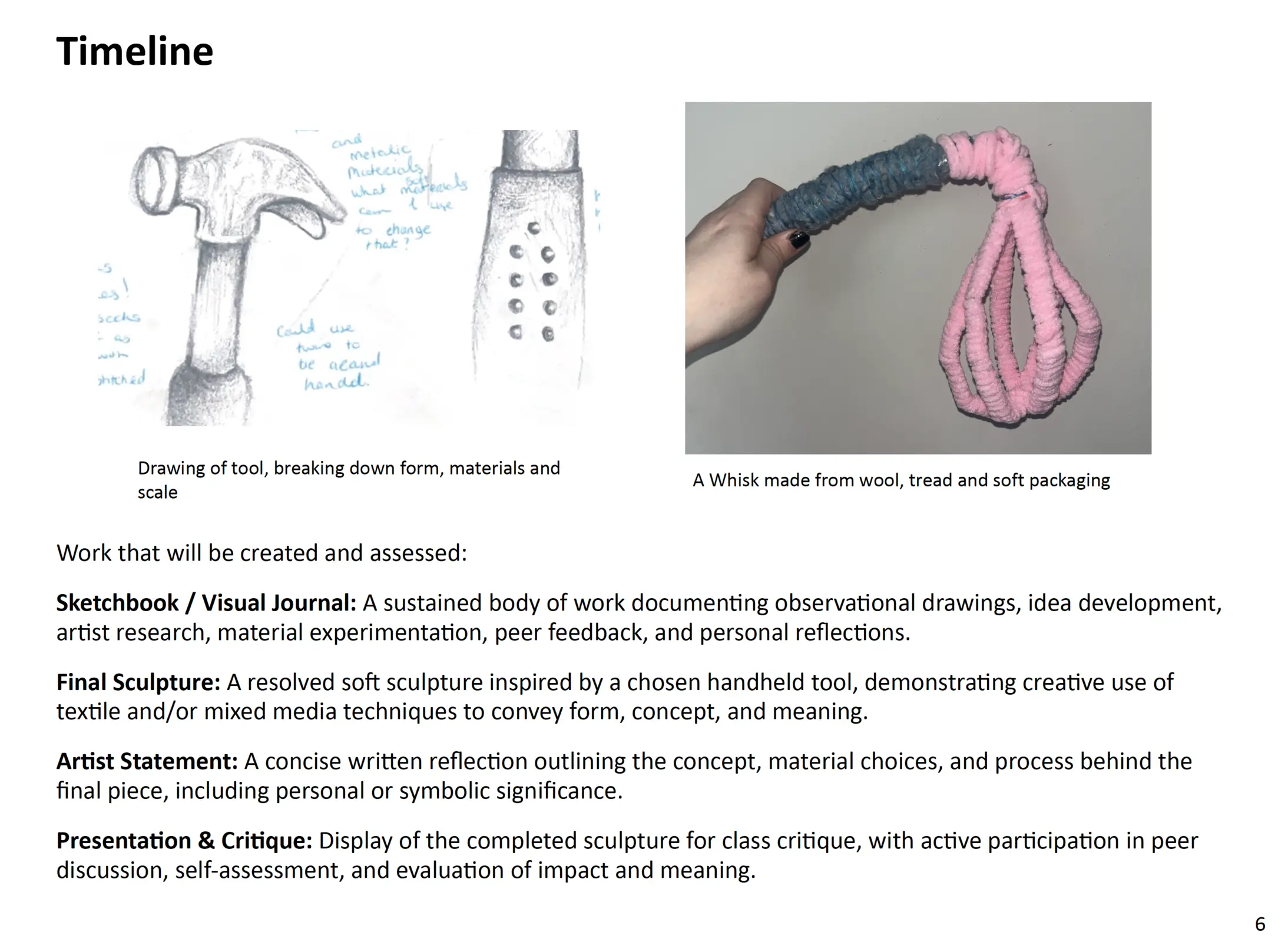
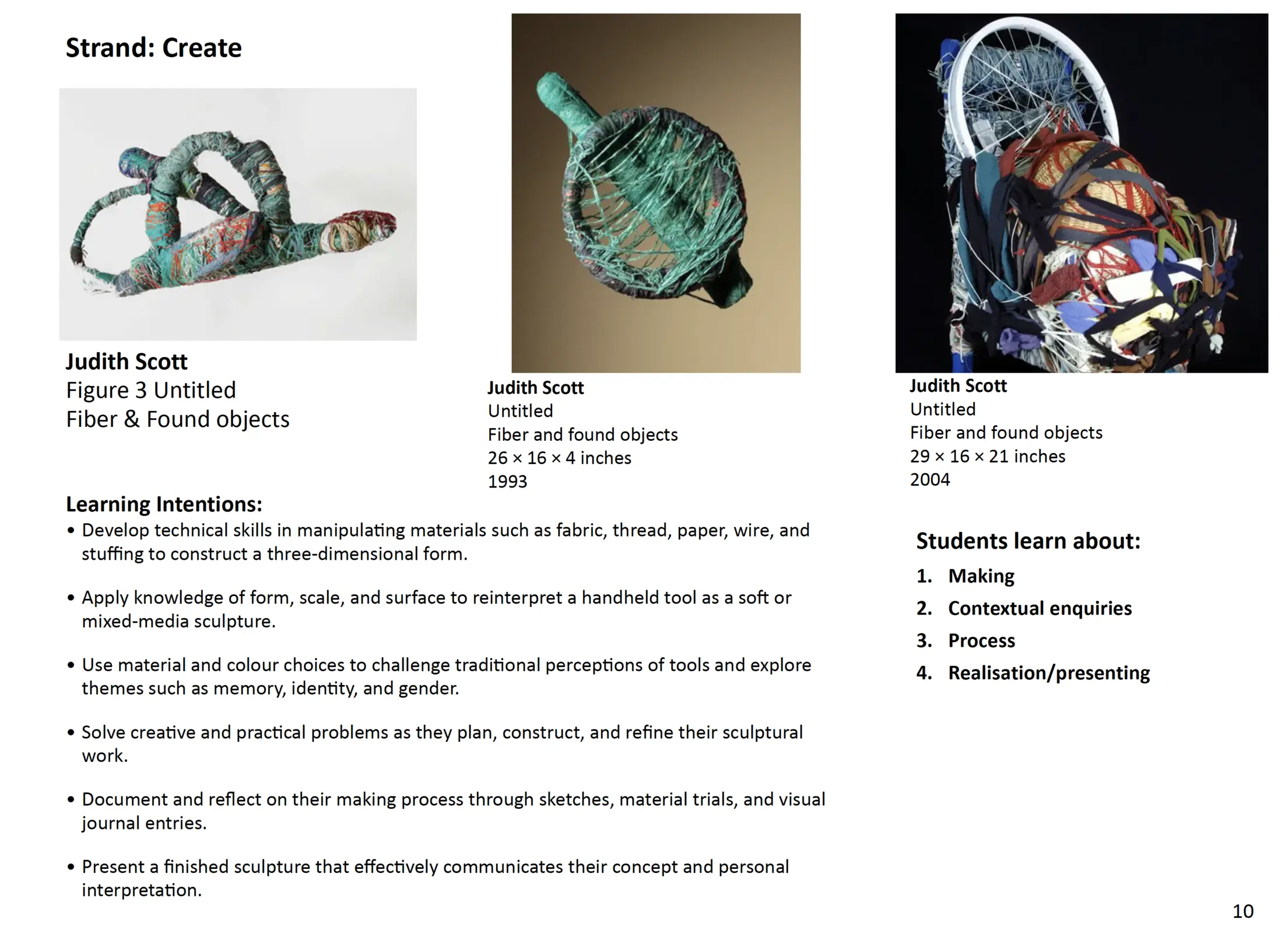
Unit of Learning: The Handheld Tool: Function, Form & Memory
This unit of learning invites students to explore the form, function, and symbolism of handheld tools;
everyday objects that connect directly to the human body through work and use. Tools such
as scissors, hammers, whisks, or trowels often carry social and cultural associations, including
gendered expectations about who uses them and why. Through observation, research, and
experimentation, students will reinterpret a chosen tool using textiles and mixed media
(fabric, thread, card, wire, papier-mâché, etc.) to create a sculptural response. By changing
materials, scale, colour, and surface, students are encouraged to challenge traditional ideas
of power, strength, and gender, for example, by making a hammer pink, soft, or delicate. This
process transforms hard, functional objects into expressive, personal artworks that reflect on
identity, memory, labour, and the roles tools play in shaping how we see ourselves and
others.