
-
- Laoise Ní Ghríofa
Laoise
Ní Ghríofa
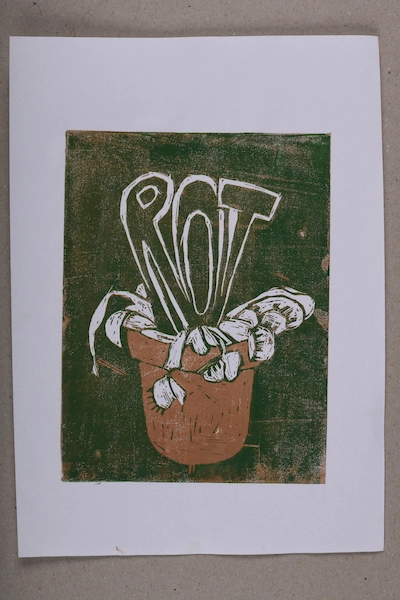
Decay: A Passage of Time
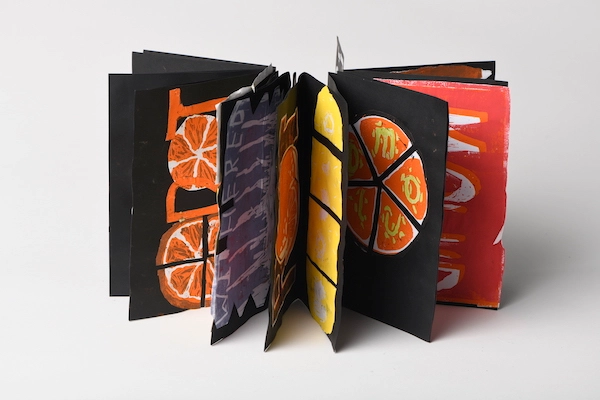
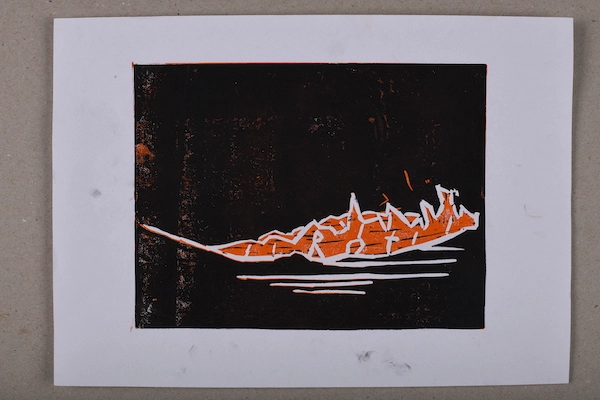
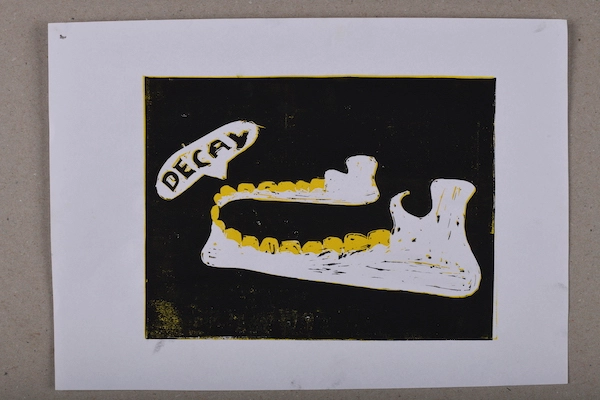
Second Year students explored the theme Decay: A Passage of Time through a two-colour A5 lino print project. The project focused on observing how materials change over time, using primary sources to inform visual responses. Students incorporated typography into their designs, selecting words connected to decay that complemented their imagery and composition. Research into typographic styles and relevant artists supported the development of their ideas. Alongside their prints, students created a collaborative accordion zine combining their finished lino prints into a collective piece.
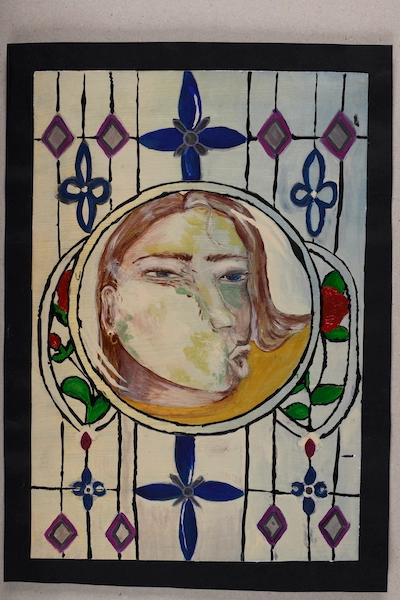
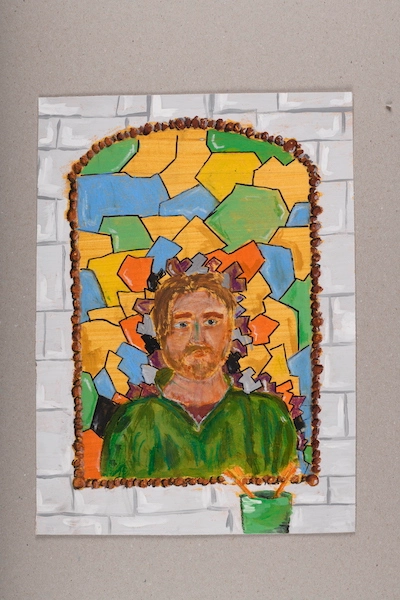
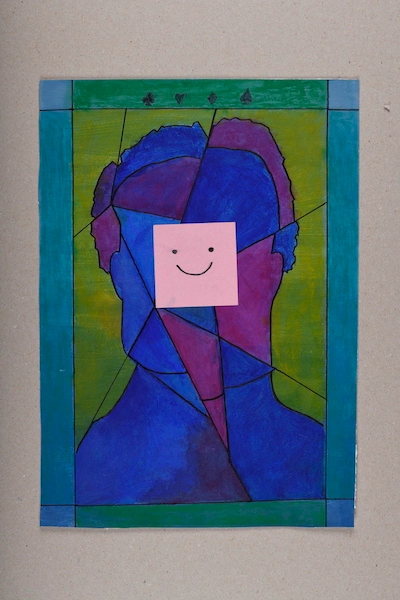
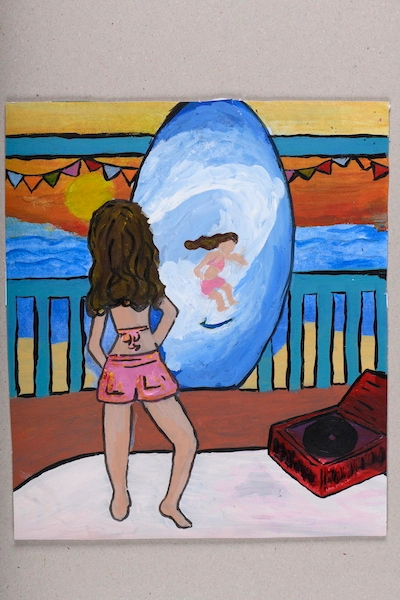
What the Mirror Sees
What the Mirror Sees is a self-portrait project in which Fifth Year students created stained glass style paintings that explore identity through observation and symbolism. Using their own primary sources, students developed compositions that reflect aspects of their personality, interests, or values. Inspired by the visual qualities of stained glass, students expressed their identities through painting. The project encouraged students to consider how they see themselves and how could they represent that visually.
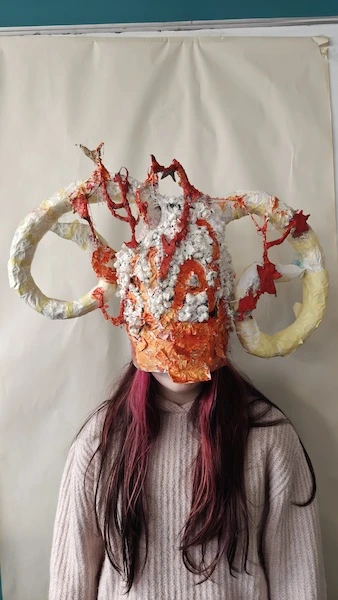
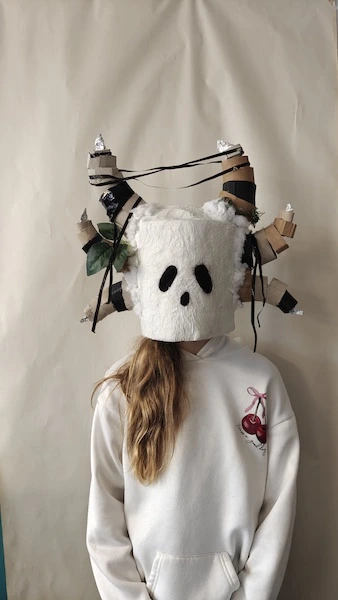
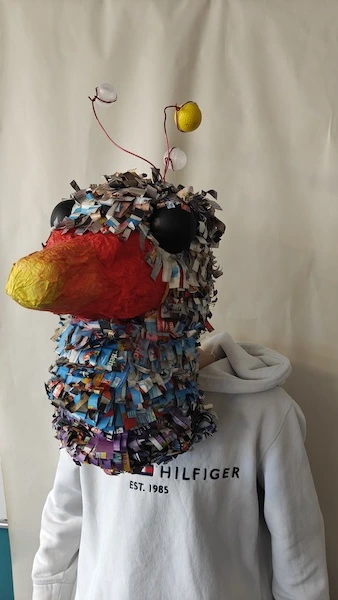
Reimagining Waste: Transforming the overlooked and unwanted
Reimagining Waste: Transforming the overlooked and unwanted is a sculptural design project in which First Year students created wearable headpieces using household waste and found materials. The project focused on rethinking discarded objects as sources of creative potential, challenging the idea of waste as something without value. Using toy animals and creatures as primary source inspiration, students developed imaginative forms that combine sculpture and storytelling. Research into contemporary artists informed their approaches to structure, composition, and concept. Through the process of designing and constructing their headpieces, students explored themes of sustainability, climate awareness, and resourcefulness. The finished works act as both expressive artworks and statements on throwaway culture. By transforming everyday waste into bold, wearable sculptures, students demonstrate how creativity can contribute to more sustainable ways of thinking and making.