
-

- Kamela Cankaj
Kamela
Cankaj
Iveagh Theatre
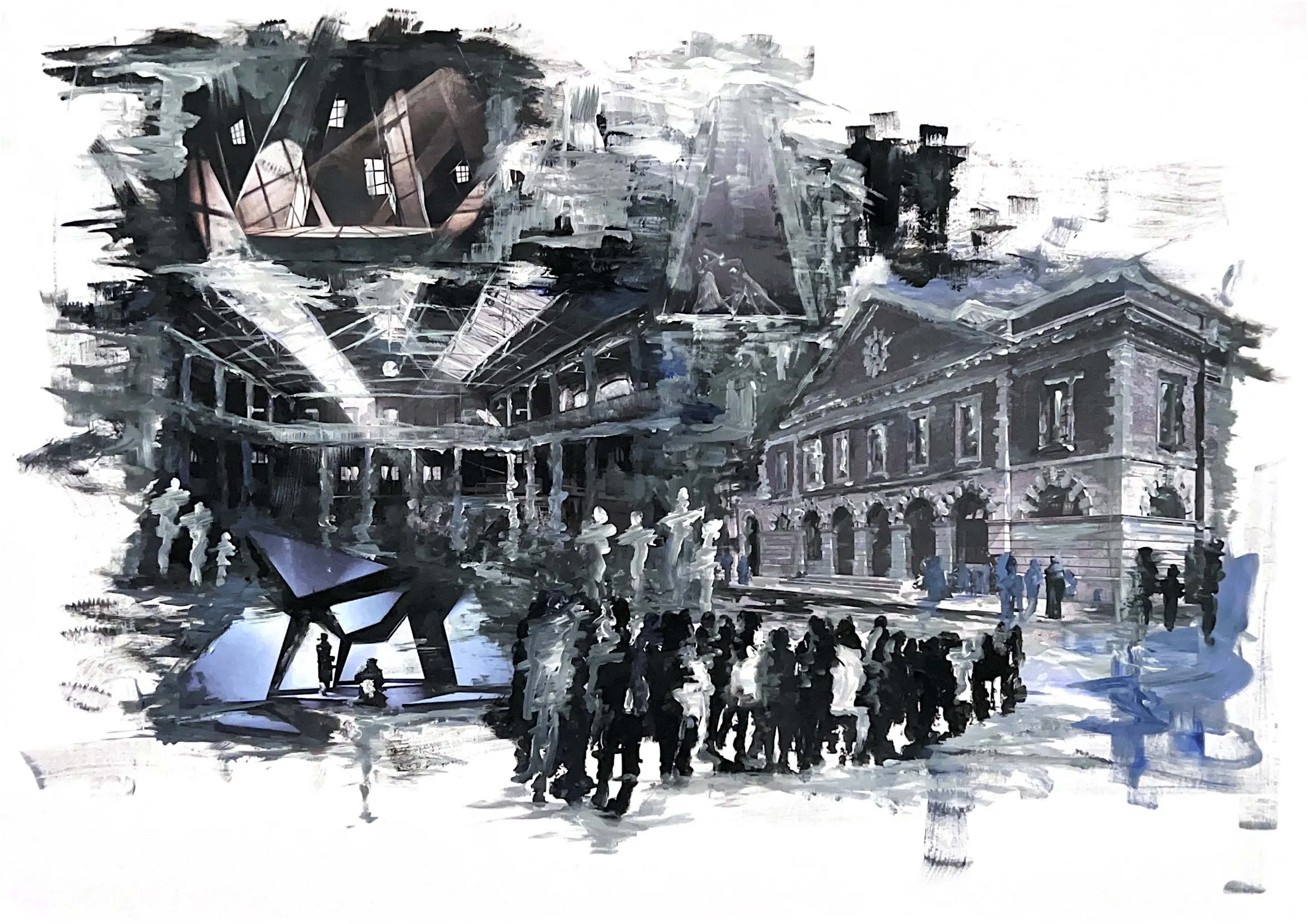
Located in the Liberties, Dublin 8, the Iveagh Markets is one of the city’s most historically significant buildings, originally constructed in the early 1900s and recognised for its distinctive red brick and stone façade, ornate carvings, and dramatic metal and glass trapezoidal roof. Despite its history as a lively marketplace, the building has remained largely unused for years, creating an opportunity for a new cultural purpose.
Iveagh Theatre reimagines the former market as a contemporary space for theatre and performance, bringing it back into use as an active public destination. The design concept is inspired by fish scales, referencing the building’s original function and market heritage. This idea informs the use of layering, curves, transparency, and materiality throughout the interior, creating a spatial language that engages light, texture, and movement while maintaining a strong connection to the building’s past.
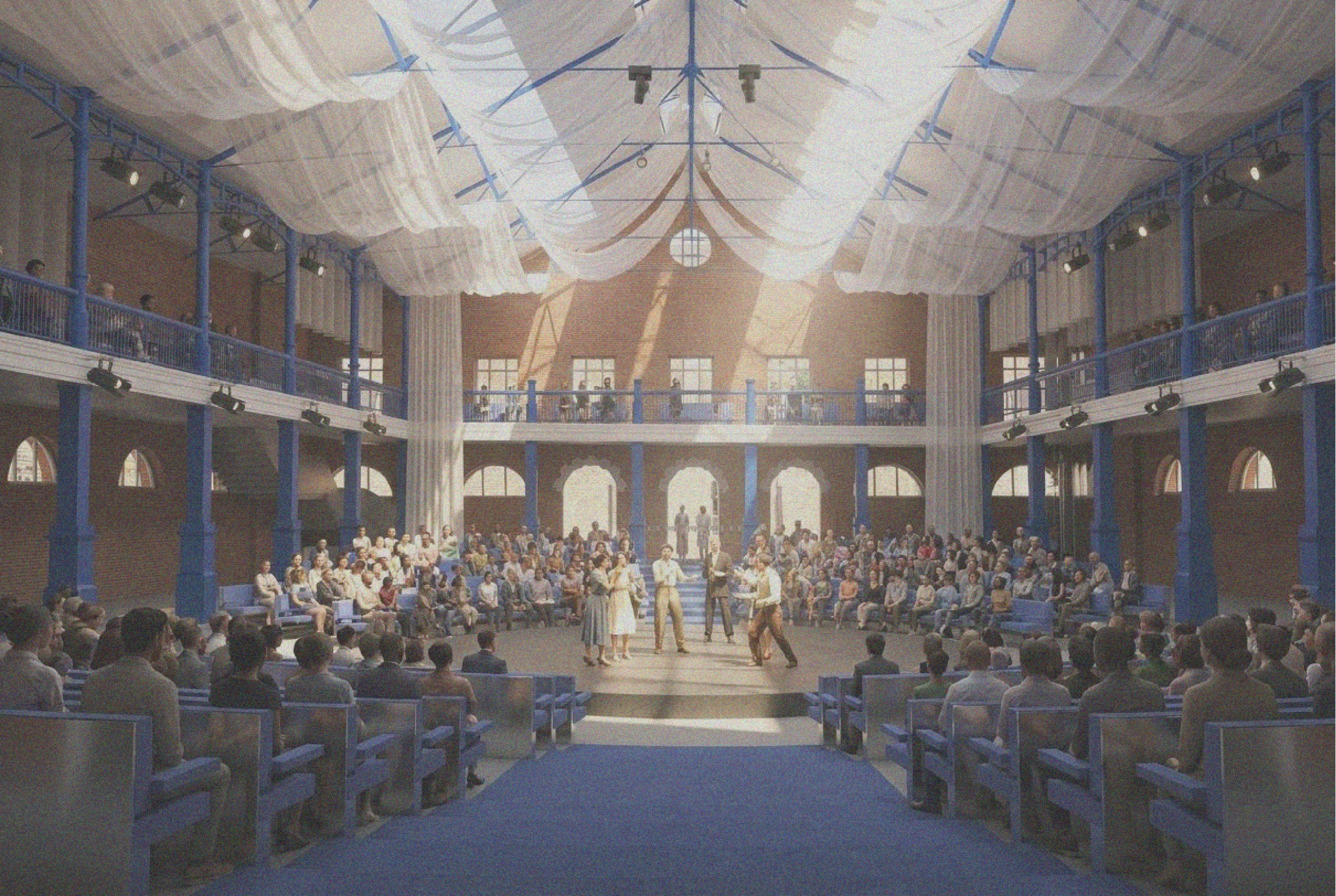
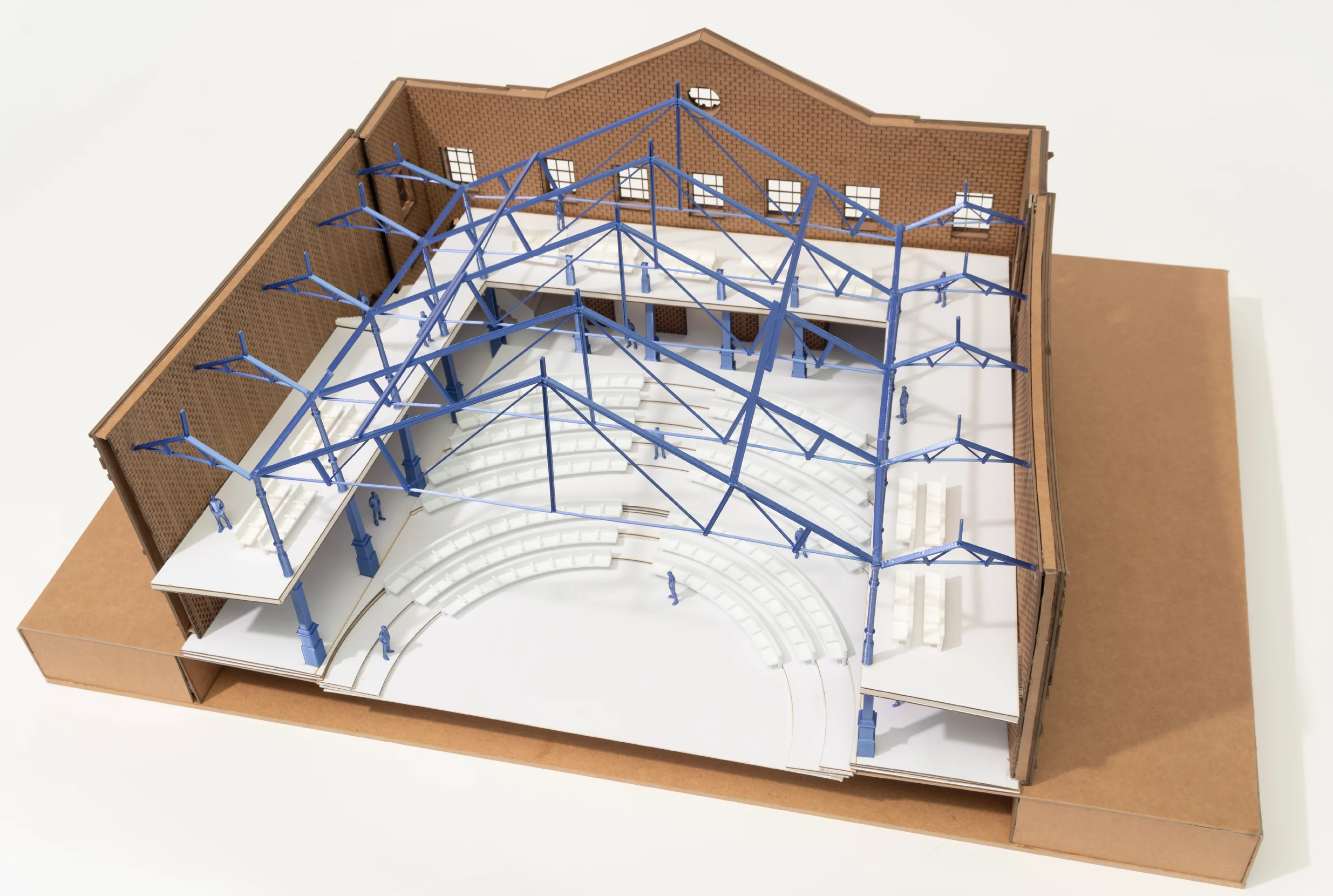
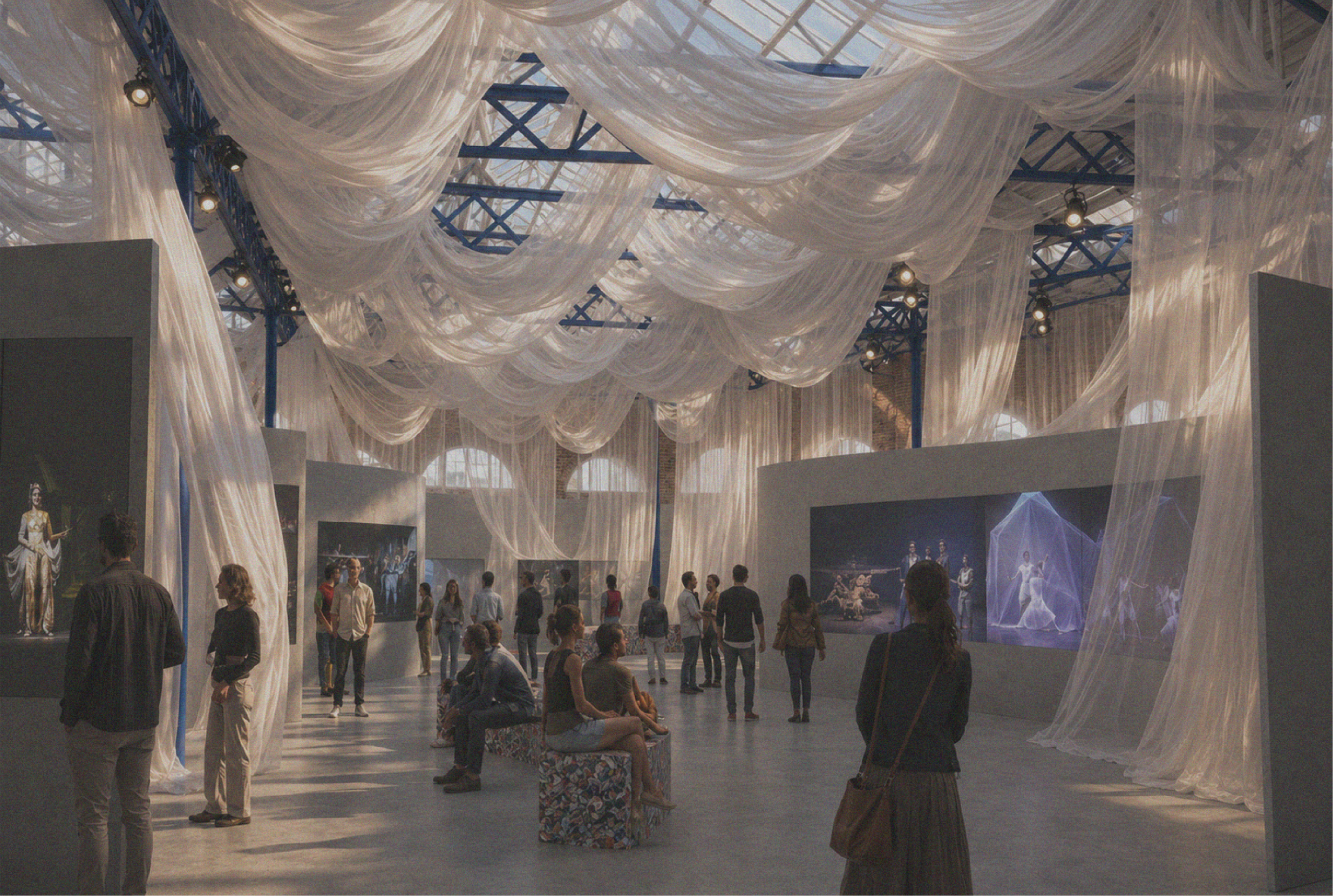
The project focuses on preserving and celebrating the existing architectural fabric, particularly the red brick structure, while introducing flexible spaces capable of supporting theatre, exhibitions, and cultural events. A theatre in the round forms the heart of the building, allowing audiences to engage with performances from multiple perspectives and encouraging a more intimate relationship between performer and viewer. Natural light is carefully integrated to enhance the atmosphere while still supporting technical performance needs.
Flexible seating and a vertically adjustable stage enable the space to adapt to different performance formats and audience arrangements. Translucent screens are introduced within exhibition and performance areas to support display, storytelling, and theatrical experimentation. Together, these interventions balance heritage conservation with contemporary cultural use, allowing the Iveagh Markets to become a vibrant, evolving hub for performance, creativity, and public engagement once again.
This proposal reinforces the market’s identity as a civic landmark within Dublin’s cultural landscape, inviting diverse communities to gather, participate, and experience shared creative expression.