
-
- Sarah Reynolds
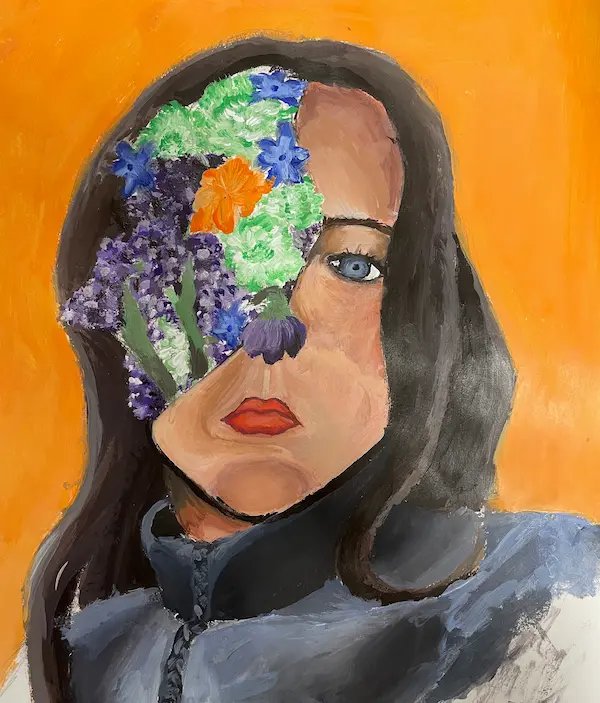
Veiled Identity: Symbolism Through Flora; Exploring Identity Through Portraiture, Painting, and Photo Collage
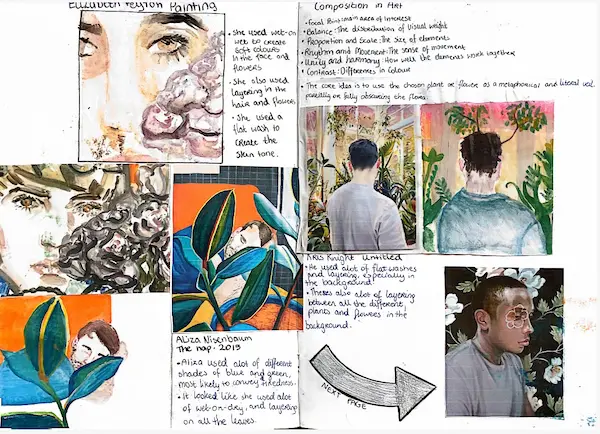
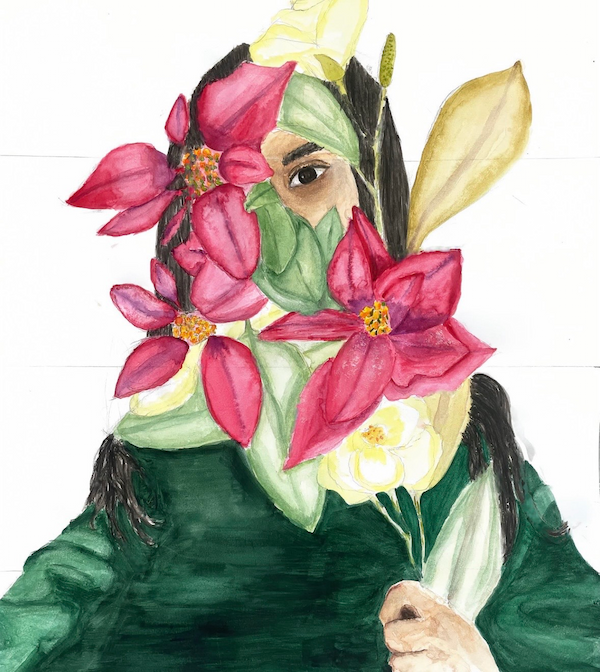
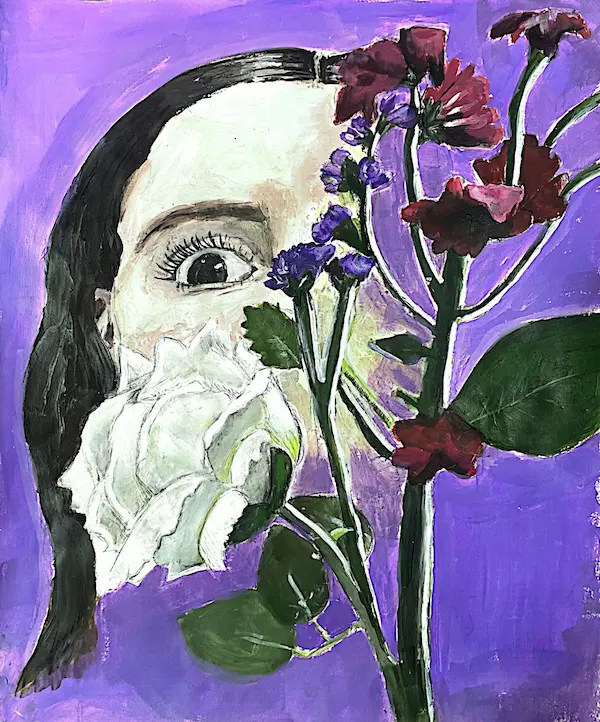
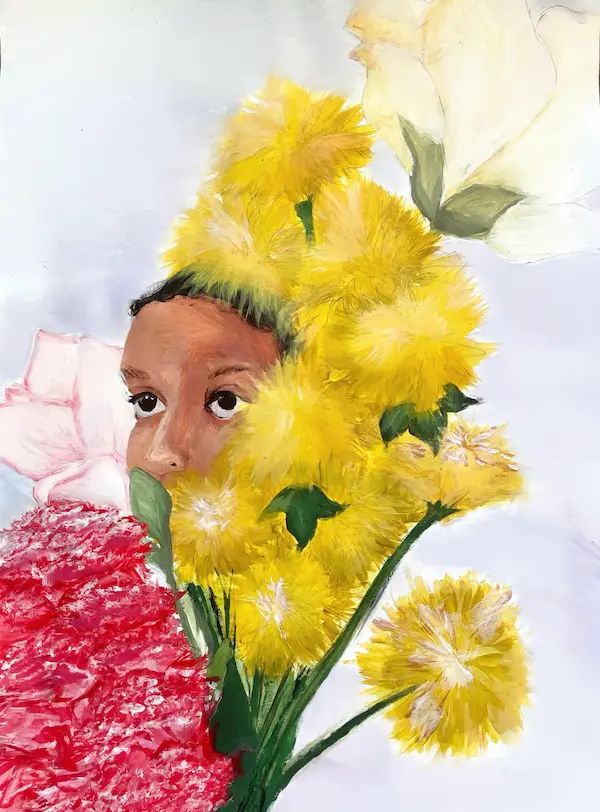
“Veiled Identity: Symbolism Through Flora” is a portraiture-based unit of learning exploring identity, symbolism, and self-expression through painting and photo collage. The project invited second-year students to construct symbolic self-portraits using botanical elements as metaphorical and physical veils, obscuring aspects of the face to represent hidden emotions, personal experiences, alter egos, and characteristics not immediately visible to others.
Through artist research, observational drawing, photography, collage, and painting, students investigated how symbolism can communicate layered narratives surrounding identity. Contemporary artists including Kehinde Wiley, Aliza Nisenbaum, and Elizabeth Peyton informed the development of the project, encouraging students to examine how portraiture can convey themes of power, memory, heritage, and individuality. Students also developed technical skills in acrylic and watercolour painting through material experimentation and artist-led studies.
Collaborative and reflective activities introduced students to symbolic interpretation through colour association, botanical research, and peer-led drawing exercises. Students developed personal mind maps exploring their traits, experiences, and characteristics before participating in a group activity using real plants and flowers to visually interpret personality traits. This encouraged students to consider how symbolic meaning can vary through personal perspective and association; for example, resilience being represented through the cactus due to its protective exterior and ability to survive in harsh conditions. These observational drawing activities allowed students to explore the emotional and symbolic potential of botanical forms before selecting plants or flowers that resonated with their sense of self.
The project emphasised experimentation and process-based learning, encouraging students to explore expressive paint application, photography, and photo collage. By merging photographic references with botanical imagery, students created layered visual narratives exploring both visible and concealed aspects of identity. The integration of collage, photography, acrylic, and watercolour encouraged highly personal and visually diverse outcomes rooted in contemporary portraiture practice.
Stencil Suspects: Wanted for Being Me; Exploring Identity Through Self-Portraiture
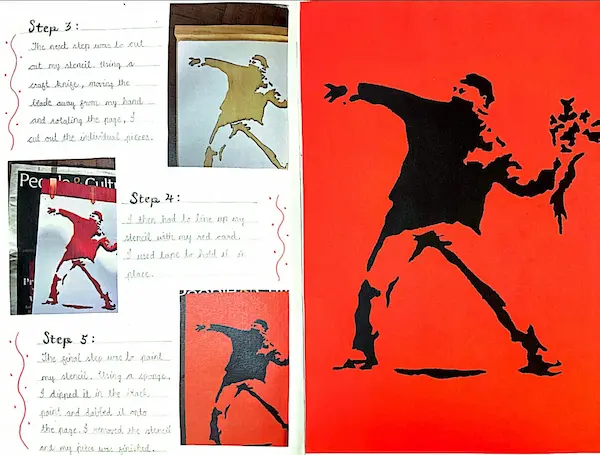
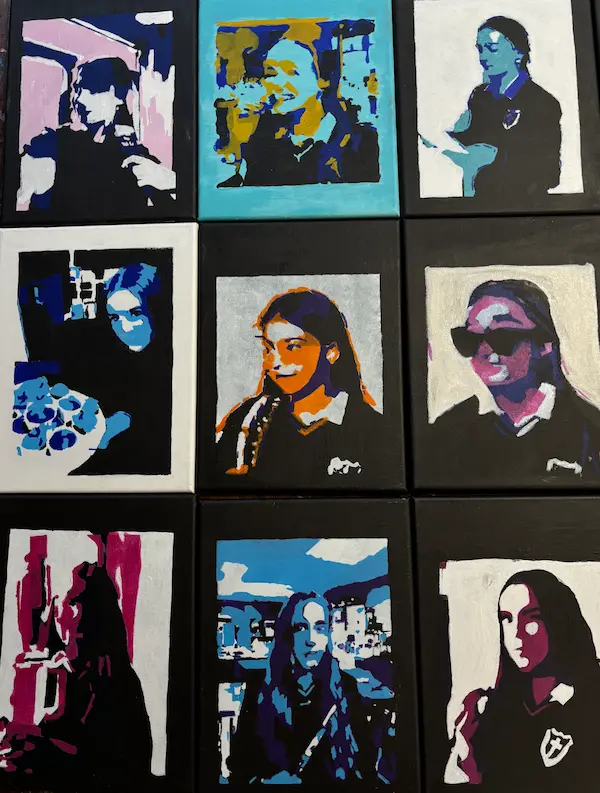
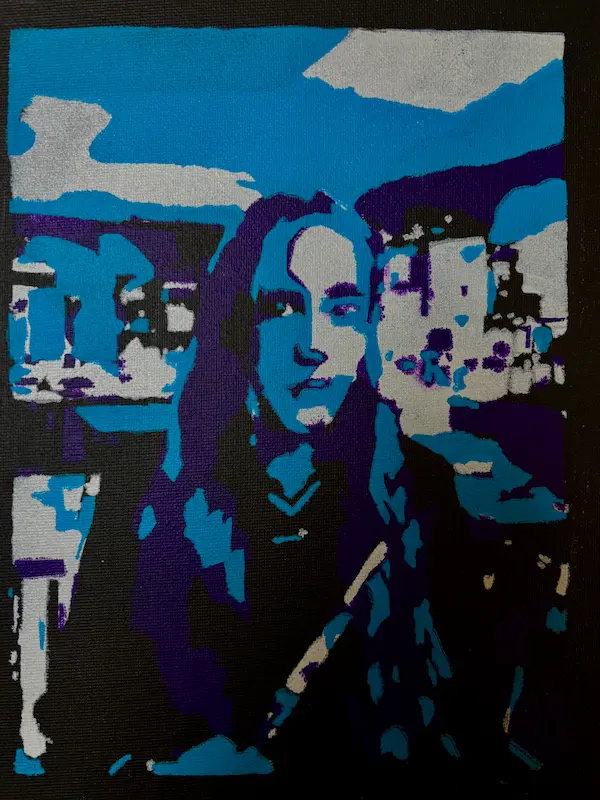
Stencil Suspects: Wanted for Being Me” is a stencil-based unit of learning exploring identity, self-expression, and visual storytelling through portraiture and street art practices. Inspired by artists including Banksy, Shepard Fairey, JR, and Blek le Rat, students investigated how stencil art can communicate personal, political, and socially charged messages through bold imagery, symbolism, and text.
Through artist research, stencil experimentation, photography, and printmaking, Transition year students explored how street art challenges traditional ideas surrounding portraiture and public space. Students first developed technical stencil-making skills by recreating and analysing existing stencil artworks, focusing on shape simplification, layering, composition, and symbolic meaning. This process introduced students to the visual language of street art and the relationship between image and message.
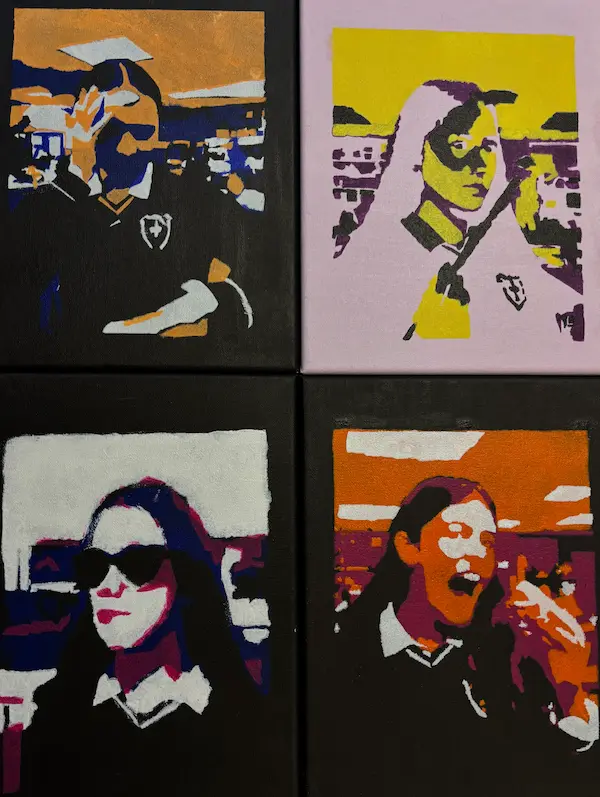
Building on this foundation, students created a “Wanted for…” self-portrait stencil poster exploring aspects of their personality, habits, interests, and individuality. Through collaborative brainstorming activities and mind mapping exercises, students developed humorous and reflective taglines that communicated personal traits and experiences. A second stage of planning encouraged students to consider how gestures, facial expressions, and props could symbolically represent their chosen tagline; for example, “Wanted for Always Running Late” was represented through a dramatic pose checking a watch.
Photography workshops formed a central part of the creative process, with students capturing staged portrait references that were later transformed into stencil compositions. The project emphasised experimentation, encouraging students to explore composition, contrast, layering, and the integration of text and image. Final outcomes included stencil prints on paper and large-scale wanted-poster style self-portraits on canvas.
By combining portraiture with contemporary street art practices, students produced bold and highly individual works that explored identity through humour, symbolism, and visual communication.
To what extent does guided questioning support secondary students in developing and applying conceptual frameworks for analysing artworks, and how can this inform strategies that support metacognition, autonomy, and critical engagement in the visual arts classroom?
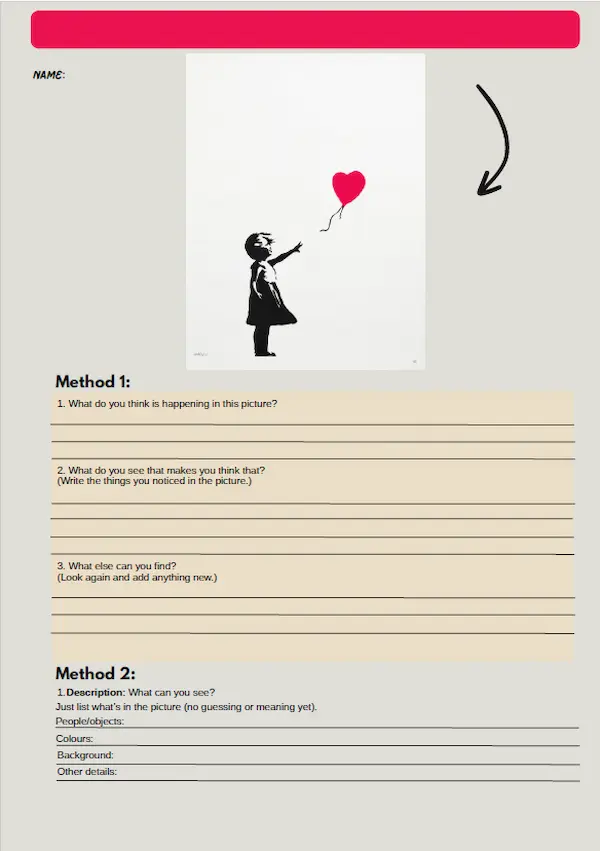
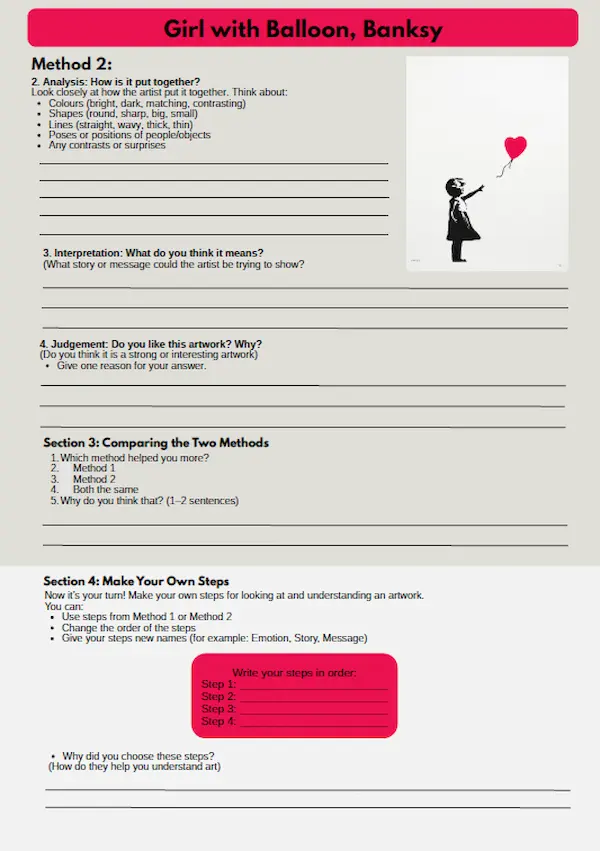
This research project examined the extent to which guided questioning supports secondary students in developing conceptual frameworks for analysing artworks, while fostering metacognition, autonomy, and critical engagement within the visual arts classroom. Rooted in constructivist theory and informed by approaches including Visual Thinking Strategies (VTS) and the Feldman Model of Art Criticism, the study explored how structured yet flexible questioning strategies could support students in moving beyond descriptive observation towards deeper conceptual interpretation.
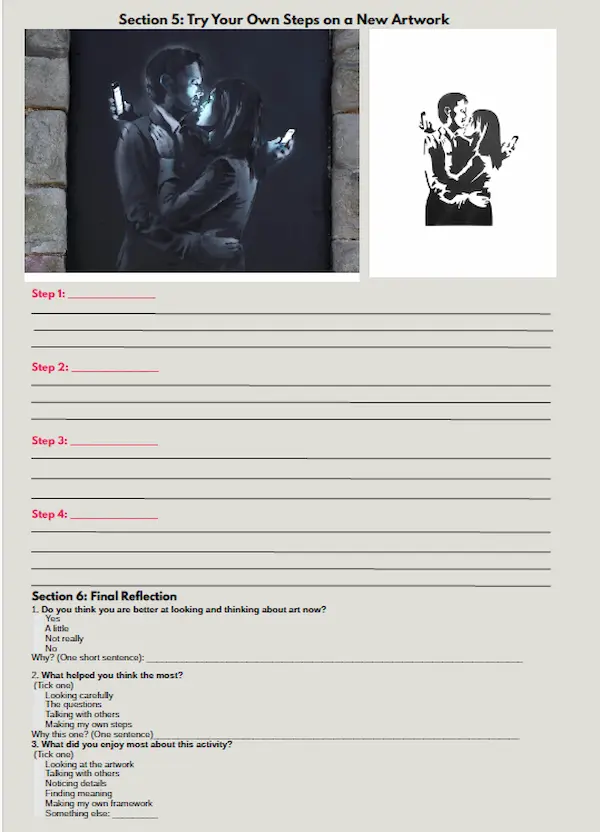
Using an action research methodology, the study was conducted across first-year post-primary visual arts classes over a ten-week period, where students engaged in a lino printing unit supported by structured artwork analysis activities. Through classroom observations, reflective journalling, questionnaires, and analysis of student work, the research investigated how scaffolded questioning, peer discussion, and reflective activities shaped students’ analytical thinking and engagement with visual culture. Banksy’s artworks were used throughout the study due to their accessible imagery and strong social and symbolic themes, supporting students in connecting visual analysis with contemporary issues and personal interpretation.
Findings revealed that guided questioning strengthened students’ ability to connect visual evidence with symbolic, emotional, and social meaning. Structured analytical approaches supported students in progressing from surface-level responses towards more conceptually grounded interpretations, while collaborative discussion encouraged reflection and reconsideration of perspectives. Over time, students began adapting analytical models into personalised frameworks, demonstrating increased confidence, metacognitive awareness, and independence when interpreting unfamiliar artworks.
The research highlighted the importance of flexibility within traditional models of art criticism. Rather than functioning as rigid structures, frameworks such as the Feldman Model became adaptable tools that supported student-led interpretation and critical visual literacy within increasingly digital and image-saturated environments.
By connecting inquiry-based pedagogy with contemporary visual arts education, this study demonstrates how guided questioning can empower students as reflective, independent, and critically engaged interpreters of visual culture.