
-
- Jason Teefey
Jason
Teefey
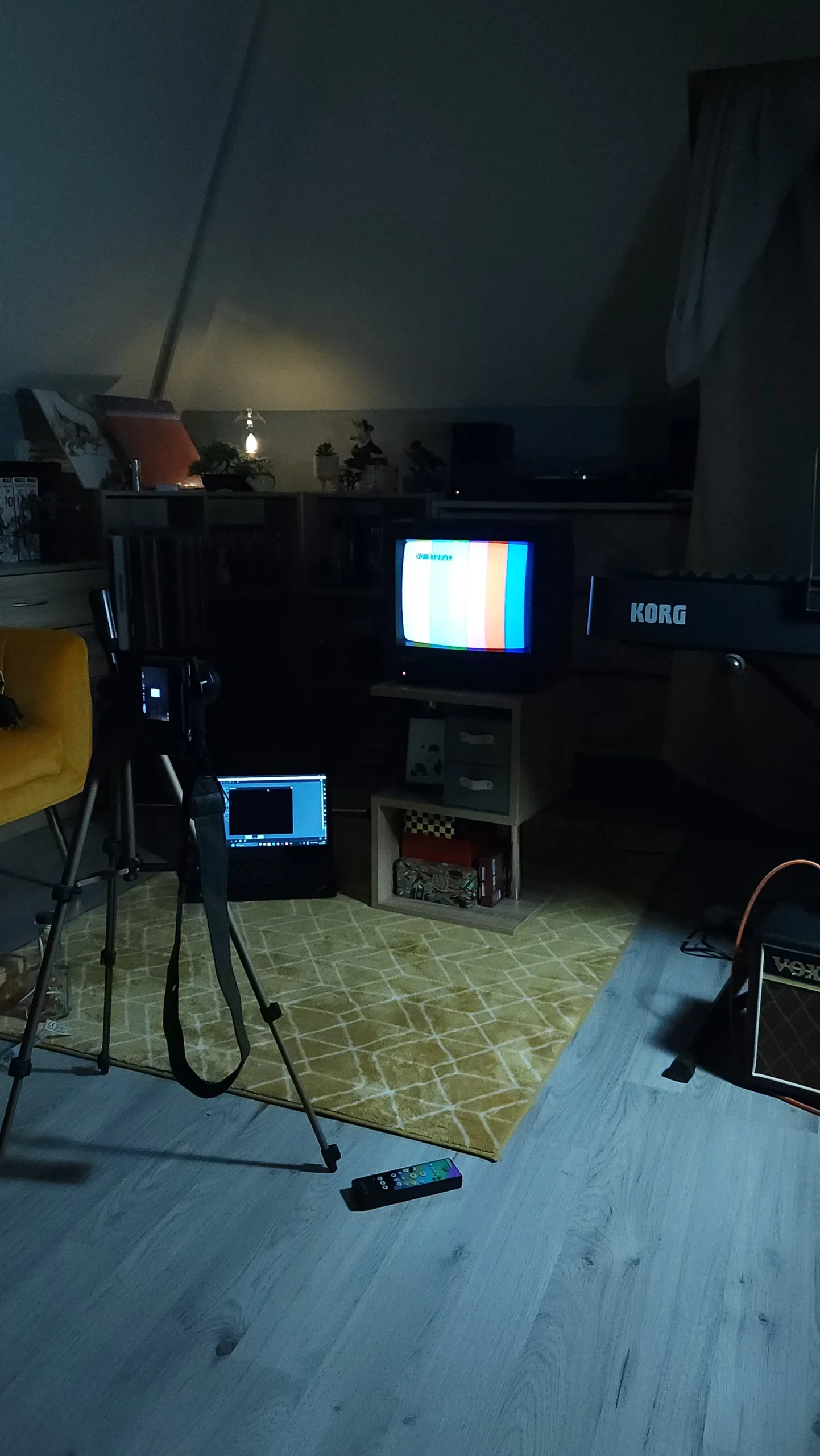
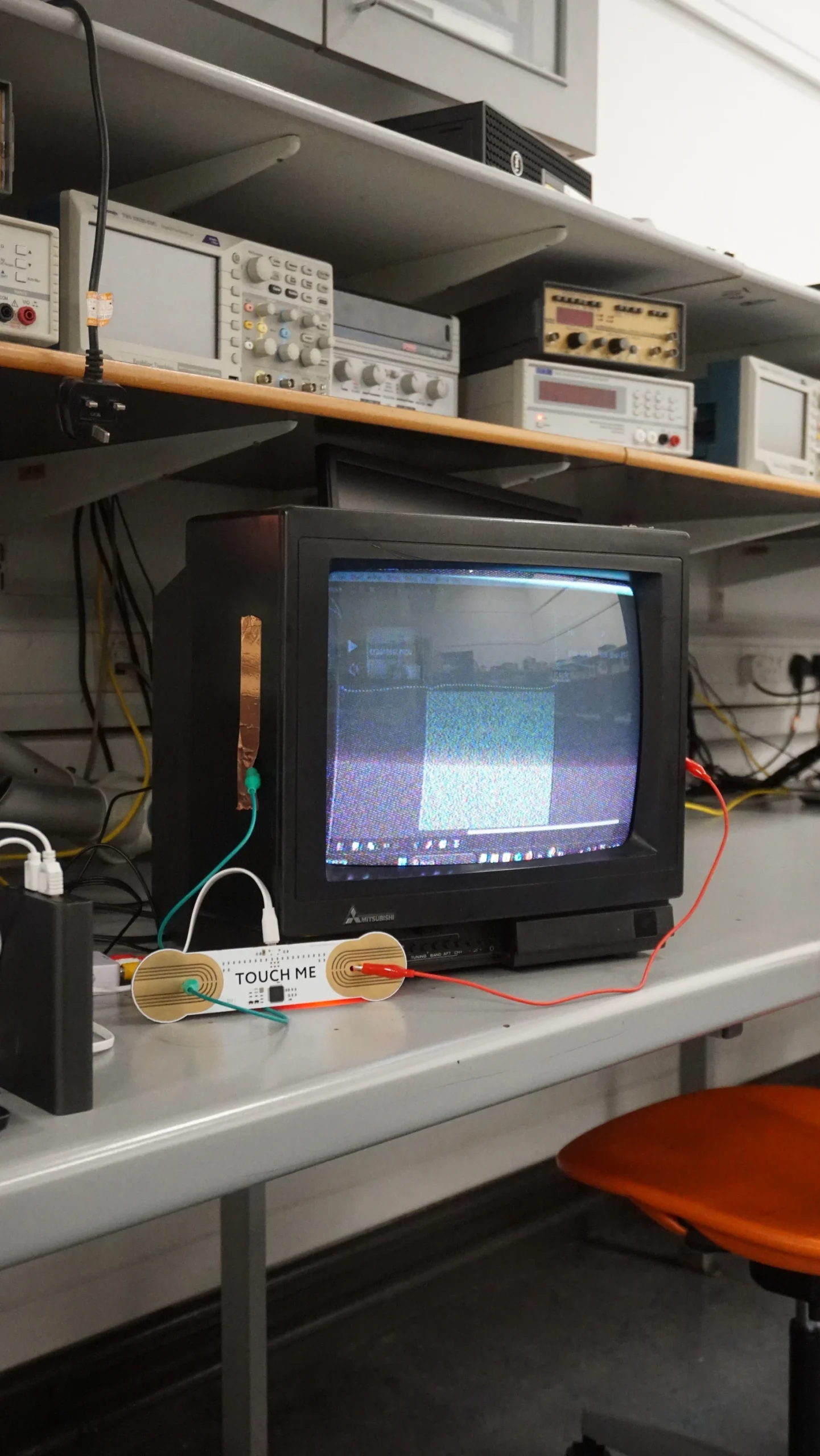
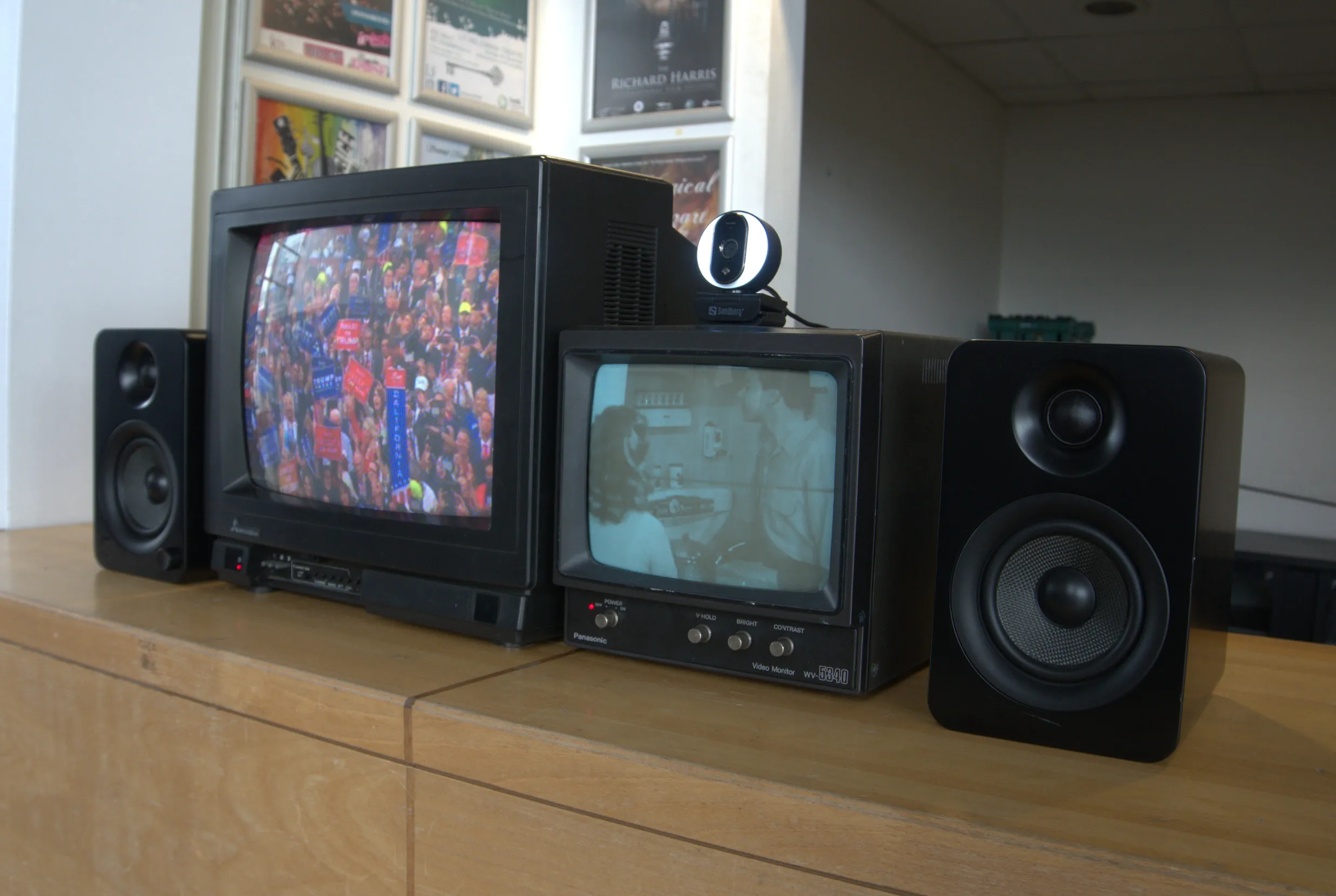
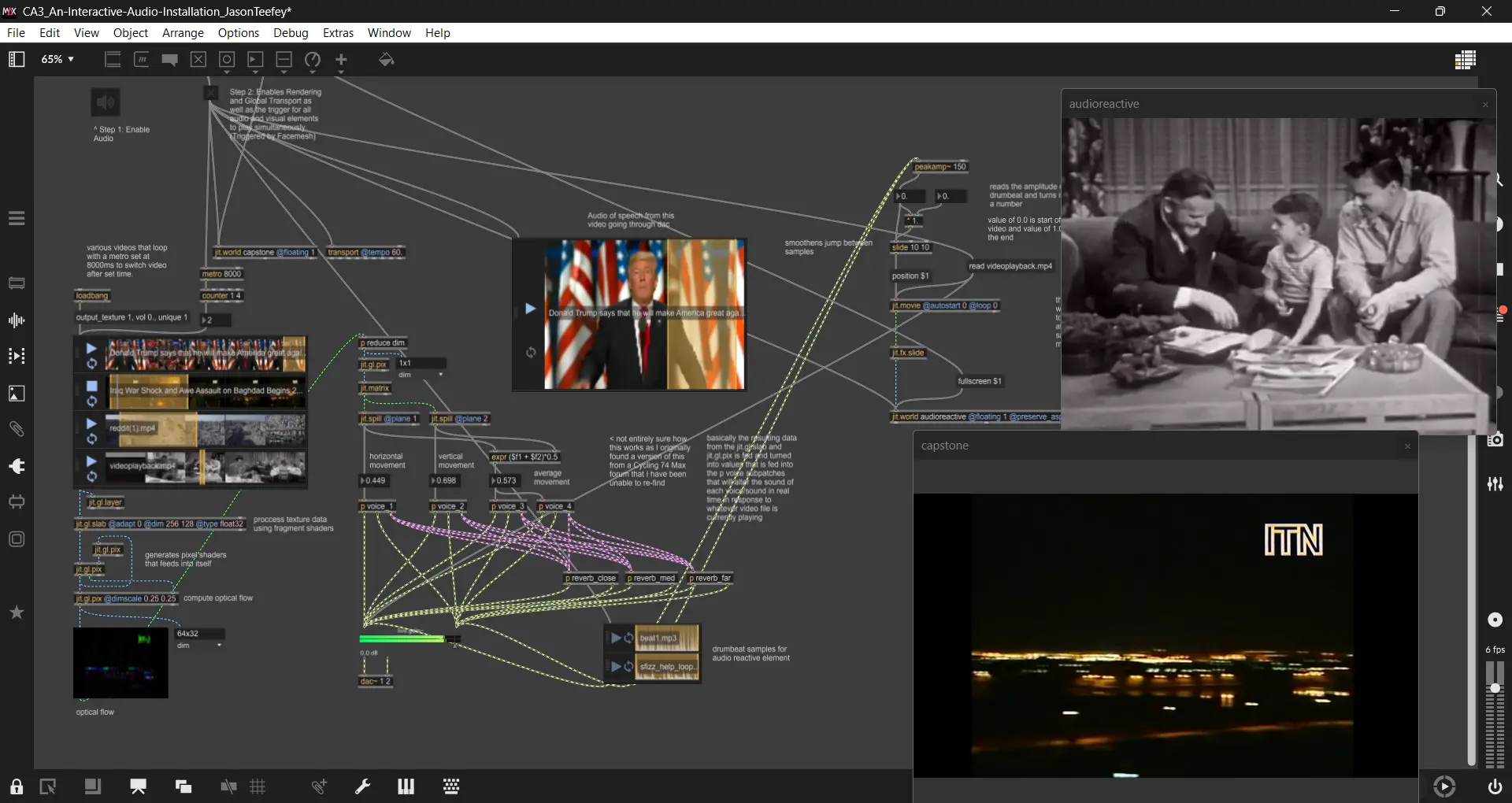
Fake Past - An Audio/Visual Installation
This installation explores human interaction and analogue technology in a post-analogue world. As we move ever further towards a fully-digital landscape powered through social media, digital marketing, and AI technology, information has become a commodity that is easily spread across the world. While this technology has allowed the world to be more connected than ever before, it has also enabled bad actors to quickly spread false and misleading information to a large audience before it can be debunked.
While ‘fake news’ is not a new concept, the digital landscape has allowed certain governments and political agitators to use fake news to create a concept this project calls a ‘fake past’. It is through this that they can promote an idealised and largely inaccurate portrayal of the past, where everyone was in their ‘right place’, and it ignores the real political and societal problems that many experienced. The creation of this ‘fake past’ is important as it allows its creator to mislead their audience and benefit politically/monetarily while directing their audiences anger towards political enemies or those deemed as a ‘problem’ or ‘inferior’ to their cause.
This body of work challenges the audience to move away from the comfort of modern digital technology and embrace the more tangible nature of analogue technology, specifically Cathode-Ray-Tube (CRT) Televisions. Through interaction with this obsolete analogue technology, this work reintroduces the friction, effort, and material presence of older technology into the viewing experience. In contrast to the flow of digital algorithms, the CRT televisions command attention, interaction, and an awareness of physical space.
By emphasizing the physical presence of the medium, this work asks the audience to become active participants rather than passive receivers, and to consider how a ‘fake past’ can quietly take hold when its distortions are repeated often enough to feel familiar.